Table of Contents
- The 5 Factors That Decide Your Gutter Material
- Gutter Material Comparison: Aluminum, Copper, Steel, and Vinyl
- Seamless vs Sectional Gutters: Which Holds Up Better?
- Gutter Size Guide: 5 vs 6 Inch Capacity Explained
- Gutter Material Cost Comparison and Long-Term Value
- Material Compatibility and Galvanic Corrosion Risks
- DIY vs Professional Installation: What Makes Sense
- Frequently Asked Questions
Last Updated: September 14, 2026
The 5 Factors That Decide Your Gutter Material
Choosing the wrong gutter materials is one of the most expensive mistakes a homeowner can make. Learning how to choose gutter materials comes down to five factors: climate exposure, roof pitch and drainage load, architectural style, budget, and installation feasibility. This guide from Metal Rivers Gutter Company breaks down each one so you can pick a system that lasts decades, not seasons.
Here’s why this matters: gutters that fail prematurely cause fascia rot, foundation erosion, and basement flooding. The material you select determines how long your system holds up against rain, snow, and UV exposure. Below, we’ll show you exactly how to match material to your home’s specific conditions, and which trade-offs matter most.
The five deciding factors are:
- Climate and weather exposure – rainfall volume, snow load, freeze-thaw cycles
- Roof pitch and drainage load – how much water your roof sheds and how fast
- Architectural style – K-style, half-round, and how profile affects curb appeal
- Upfront cost vs. long-term value – what you pay now against what you save later
- Installation feasibility – DIY vs. professional, and material compatibility
Match the material to your climate first. A premium material in the wrong environment underperforms a mid-range material in the right one.
Climate and Weather Exposure
Climate is the single biggest driver of gutter material performance. Homes in heavy-rainfall regions need wider profiles and stronger hangers, while cold climates demand materials that handle snow load and thermal expansion without cracking.
Coastal environments introduce salt spray, which accelerates corrosion on inferior metals. Inland areas with intense sun exposure face UV degradation on plastic systems. If you live somewhere with repeated freeze-thaw cycles, metal expands and contracts constantly, and seams are the first thing to fail. That’s a strong argument for seamless construction.
According to FEMA guidance on protecting homes from water damage, properly managed roof drainage is a first line of defense against foundation and basement water problems.
Roof Pitch, Size, and Drainage Load
Steep, large roofs shed enormous volumes of water in a short window. A roof’s drainage load determines the gutter profile and downspout count you need, not aesthetics.
A common mistake is sizing gutters by what the neighbor has rather than by roof area. A steep roof feeding a narrow gutter overwhelms the system during heavy rainfall, sending water straight past the fascia. The result is soil erosion at the foundation and staining on siding. If your roof is large or steep, plan for a wider profile and more downspouts before you choose a material.
Gutter Material Comparison: Aluminum, Copper, Steel, and Vinyl
Aluminum is the best all-around choice for most homes because it balances cost, corrosion resistance, and weight. Copper wins on longevity and curb appeal but costs the most. Steel offers high tensile strength for harsh conditions, and vinyl is the budget option with real durability limits.
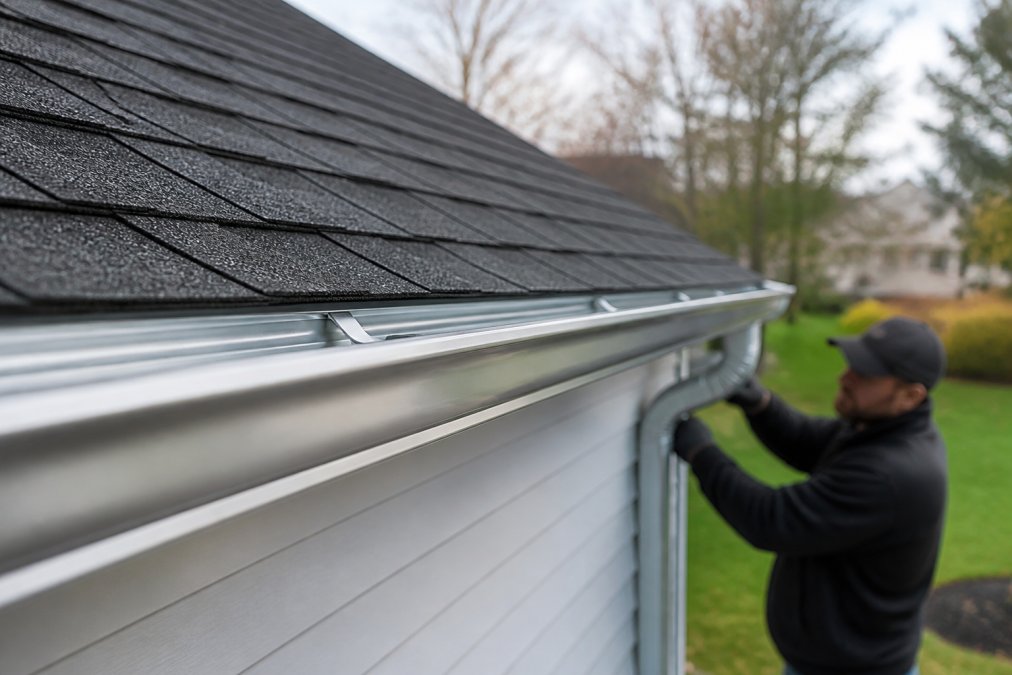
Each material behaves differently across the factors above. Here’s how they stack up:
| Material | Corrosion Resistance | Lifespan | Best For | Main Drawback |
|---|---|---|---|---|
| Aluminum | High (rust-proof) | 20+ years | Most homes, all climates | Dents under impact |
| Copper | Very high | 50+ years | High-end, coastal homes | High upfront cost |
| Galvanized steel | Moderate | 20-30 years | Snow load, heavy rain | Rusts if coating fails |
| Vinyl | High (no rust) | 10-20 years | Tight budgets | UV degradation, brittleness |
Aluminum gutters resist rust, take paint well, and handle thermal expansion without warping. The drawback: thin gauges dent under ladders or falling branches.
Copper gutters develop a protective patina and outlast nearly everything. They cost the most and require soldering for a clean finish, which is skilled work.
Galvanized steel gutters offer excellent tensile strength for snow load and heavy rainfall capacity. The weak point is the zinc coating; once it scratches through, rust starts.
Vinyl gutters are inexpensive and simple to install, but they become brittle in cold and fade under UV exposure. Best for mild climates and short-term budgets.
Aluminum for nearly every homeowner; copper only when curb appeal and longevity justify the cost.
Seamless vs Sectional Gutters: Which Holds Up Better?
Seamless gutters outperform sectional gutters on leak prevention because they’re cut to length on-site, leaving joints only at corners and downspouts. Sectional systems snap together in short lengths, creating many seams where leaks and clogs begin.
The trade-off is cost and installation. Seamless requires custom fabrication with a machine brought to your home, so it’s a professional job. Sectional gutters can be bought off the shelf and installed by a handy homeowner, but every seam is a future failure point. If you’ve had gutters that leaked within a couple of years, seams were almost certainly the cause.
For a leak-free, maintenance-light system, seamless is the better long-term value.
Gutter Size Guide: 5 vs 6 Inch Capacity Explained
Gutter Material Cost Comparison and Long-Term Value
| Material | Typical Installed Cost per Linear Foot | Typical Lifespan | Approx. Cost per Year of Service |
|---|---|---|---|
| Vinyl | $3-$6 | 10-20 years | $0.20-$0.60 |
| Aluminum | $6-$12 | 20-30 years | $0.20-$0.60 |
| Galvanized steel | $8-$15 | 20-30 years | $0.27-$0.75 |
| Copper | $25-$40+ | 50+ years | $0.50-$0.80 |
| Zinc | $20-$35 | 50+ years | $0.40-$0.70 |
Ask each contractor for a cost-per-year estimate based on expected lifespan. It’s the fastest way to compare a $4,000 aluminum job against an $8,000 copper job on equal footing.
Material Compatibility and Galvanic Corrosion Risks
Material Compatibility Matrix
| Gutter Material | Aluminum | Copper | Galvanized Steel | Zinc | Vinyl |
|---|---|---|---|---|---|
| Aluminum | Compatible | Avoid | Isolate | Isolate | Compatible |
| Copper | Avoid | Compatible | Avoid | Compatible | Compatible |
| Galvanized Steel | Isolate | Avoid | Compatible | Isolate | Compatible |
| Zinc | Isolate | Compatible | Isolate | Compatible | Compatible |
| Vinyl | Compatible | Compatible | Compatible | Compatible | Compatible |
A few practical rules fall out of this table:
Regional Climate Considerations
| Climate Stressor | Best Material | Avoid | Why |
|---|---|---|---|
| Heavy snow load | Galvanized steel, aluminum | Vinyl | Vinyl becomes brittle and cracks under ice; steel and aluminum handle weight |
| Salt-air coastal | Copper, aluminum | Galvanized steel | Salt accelerates rust on steel; copper and aluminum resist corrosion |
| Intense UV / high heat | Aluminum, copper | Vinyl | Vinyl fades and warps; metals hold up |
| Freeze-thaw cycles | Aluminum (seamless) | Sectional vinyl | Seams fail first; seamless aluminum expands and contracts without cracking |
| Heavy rainfall | Aluminum, steel (6-inch) | Undersized vinyl | Wider profiles and stronger hangers needed |
| Wildfire-prone | Steel, aluminum | Vinyl | Metal won’t ignite from embers; vinyl can melt or burn |
Mixing aluminum gutters with copper hangers or fasteners causes galvanic corrosion that eats through the aluminum. Match all hardware to the gutter metal, and check the compatibility matrix before buying any accessory.
DIY vs Professional Installation: What Makes Sense
Frequently Asked Questions
What is the rule of thumb for choosing gutter materials?
Match the material to your climate first, then your budget. Aluminum works for most homes because it resists rust and costs less than copper or steel. In coastal or high-rainfall areas, copper and galvanized steel last longer but cost more upfront. Check snow load, tree debris, and roof pitch before deciding. A local installer can assess your specific drainage needs.
Should I choose seamless or sectional gutters for my home?
Seamless gutters are cut on-site to fit your roofline exactly, which removes the joints where sectional gutters tend to leak. Sectional gutters cost less upfront and work for simple rooflines or DIY projects. If your home has long runs, complex angles, or heavy rainfall, seamless gutters reduce leak risk and maintenance over time.
Should I use 5 or 6 inch gutters?
A 5-inch K-style gutter handles most residential roofs with average rainfall. Step up to 6-inch if your roof area exceeds 1,200 square feet, you get heavy storms, or your roof pitch is steep. Larger gutters move more water and reduce overflow during downpours. A gutter size guide from a local installer can confirm the right capacity for your home.
Which gutter material offers the best longevity?
Copper lasts the longest, often 50 to 100 years, because it develops a protective patina and resists corrosion. Galvanized steel runs 20 to 40 years with proper maintenance. Aluminum typically lasts 20 to 30 years. Vinyl is the shortest-lived at 10 to 20 years, as it becomes brittle from UV exposure and temperature swings.
What material should not be used for gutters?
Avoid mixing metals that cause galvanic corrosion, such as copper gutters with aluminum hangers or steel fasteners. The contact point corrodes quickly and creates leaks. Also skip thin-gauge vinyl in areas with heavy snow or ice, since it cracks under load. Uncoated steel without a galvanized or painted finish will rust through in a few seasons.
How does local climate impact the choice of gutter material?
Cold climates with freeze-thaw cycles favor aluminum or steel because they handle thermal expansion without cracking. Coastal environments need copper or aluminum with a protective finish to resist salt corrosion. Areas with heavy tree cover benefit from wider gutters and guards. Snow load and ice dam risk also push homeowners toward stronger hangers and heavier-gauge metal.
Gutter materials are only as good as the installation behind them, and that’s where most systems quietly fail. Metal Rivers Gutter Company delivers custom seamless gutters cut on-site, a 5-year workmanship warranty, and free on-site inspections, with a BBB A+ rating and 4.8 stars from 51 Google reviews. Get a quote from Metal Rivers Gutter Company and protect your home with drainage built to last.