Table of Contents
- Seamless vs. Sectional Gutters: Side-by-Side Comparison
- Seamless Gutter Installation Cost Per Foot: What Drives the Price
- Sectional Gutter Costs and Long-Term Expenses
- Average Lifespan of Sectional vs Seamless Gutters
- Preventing Ice Dams with Proper Gutter Systems
- Hidden Costs and Regional Labor Rate Variance
- Which Option Makes Sense for Your Home
- Frequently Asked Questions
Last Updated: September 25, 2026
Seamless vs. Sectional Gutters: Side-by-Side Comparison
The decision between seamless vs sectional gutter cost isn’t just about upfront price, it’s about what you’re actually getting for your money over time.
The difference between these two systems is more dramatic than most people realize, especially when winter hits hard and ice dams threaten your roof.
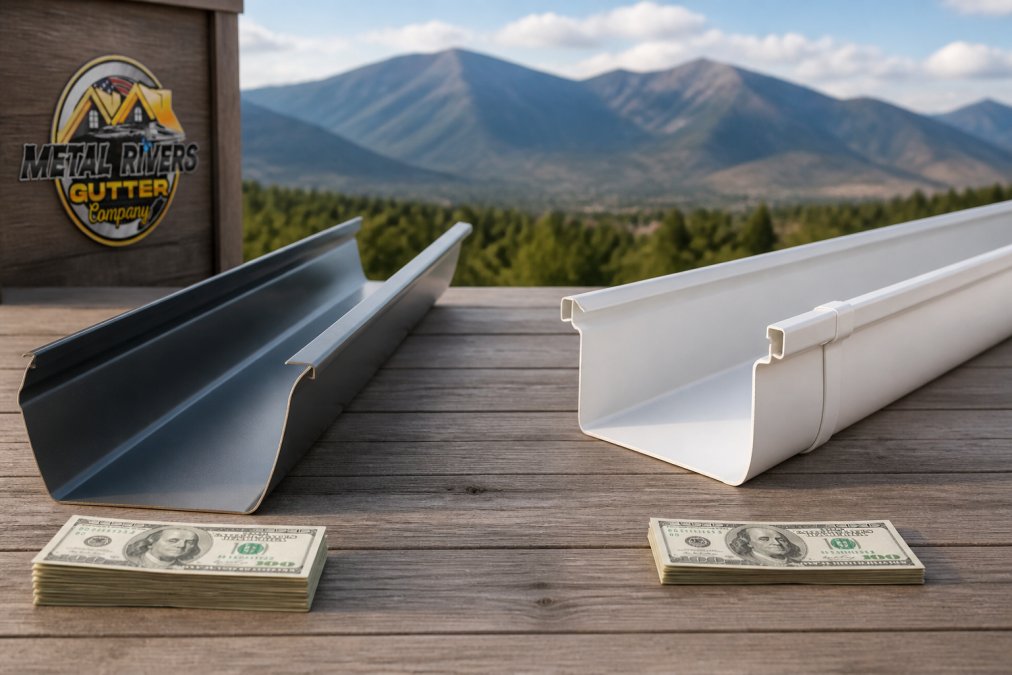
Seamless gutters cost more upfront but save money over time. Sectional gutters are cheaper initially but develop problems that add up. One will almost certainly be the better choice for your home.
Let’s break down exactly what separates these systems and where your money actually goes.
| Feature | Seamless Gutters | Sectional Gutters |
|---|---|---|
| Installation Method | Custom-cut on-site | Pre-fabricated sections assembled |
| Seams and Joints | Zero seams | Multiple seams (every 10 feet) |
| Leak Risk | Minimal | Higher at joints over time |
| Winter Ice Dam Risk | Lower (fewer leak points) | Higher (seams trap debris) |
| Maintenance Needs | Low | Moderate to high |
| Upfront Investment | Higher | Lower |
| Long-term Durability | 20-40+ years | 10-20 years |
Seamless Gutter Installation Cost Per Foot: What Drives the Price
Seamless gutters are custom-fabricated on-site using a portable machine that creates one continuous gutter with no joints or seams. This costs more because it requires skilled labor, specialized equipment, and on-site measurements tailored to your specific home rather than a generic template.
Price drivers include custom on-site fabrication, trained technicians, material selection, home complexity, and proper downspout placement.
The real value shows up over time. With no seams, there’s nowhere for water to seep through. Seamless gutters shed debris more easily, meaning fewer clogs and less standing water, the exact conditions that create ice dams.
In a Northern Colorado winter, snow melts during the day and refreezes at night. With sectional gutters, debris gets trapped at every seam, water pools, and ice forms in those pockets, forcing water back under your shingles.
Sectional Gutter Costs and Long-Term Expenses
Sectional gutters come in pre-made 10-foot pieces that bolt together on-site. Material costs are lower, which is why many homeowners choose this route initially.
The lower upfront cost often leads to higher long-term expenses. Sealant fails at joints, water seeps through, and fasteners loosen. Each seam becomes a leak point, requiring routine maintenance, frequent cleaning, resealing, and section replacement.
In winter, sectional gutters perform worse. Seams collect pine needles and leaves, trapping water that freezes into ice dams, harder to prevent and more damaging to your roof.
Average Lifespan of Sectional vs Seamless Gutters
Lifespan is where the real financial picture emerges, and it’s what most homeowners overlook.
Sectional Gutters: The Replacement Cycle
Sectional gutters typically last 10 to 20 years. Years 1-5 are trouble-free, but by year 5-10 sealant fails at joints and fasteners loosen. Years 10-15 bring corrosion, sagging, and repairs. By year 15-20, replacement is necessary.
In freeze-thaw climates like Northern Colorado, water enters joints, freezes, expands, and accelerates corrosion, pushing replacement to year 12-15 instead of 20.
Seamless Gutters: The Long-Term Play
Seamless gutters last 20 to 40 years (copper can exceed 50). Years 1-10 are virtually maintenance-free with no joint failures. Years 10-20 see minimal degradation because there are no weak points for water infiltration. Years 20-40+ remain functional with basic care.
No seams means water doesn’t pool, ice doesn’t form in pockets, and corrosion doesn’t accelerate, the gutter simply sheds water and lasts.
Total Cost of Ownership Over 30 Years
This is where the math becomes compelling. Let’s walk through a realistic scenario for a typical home:
Sectional Path: Initial installation, annual repairs for years 5-15, full replacement at year 15. Total cost over 30 years plus ongoing hassle.
Seamless Path: Initial installation, minimal annual maintenance, no replacement needed. Total cost over 30 years with one installation.
The upfront premium for seamless gutters is recouped through avoided repairs and eliminated replacement cycles, plus you avoid multiple contractor visits, emergency repairs, and the uncertainty of whether patches will hold through the next winter.
Winter Performance and Hidden Costs
In freeze-thaw climates, seamless gutters have a clear advantage. Sectional systems fail faster because water trapped at seams freezes and expands, ice dams form more readily (causing roof leaks and interior water damage), and debris accumulation accelerates corrosion.
Seamless gutters shed water more efficiently, reducing ice dam risk and the likelihood of costly water damage inside your home. That protection is part of the value proposition, even if it doesn’t show up as a line item on your gutter invoice.
The Bottom Line
If you’re staying in your home for 20+ years, a seamless gutter system is almost certainly the lower-cost option when you factor in repairs, replacement, and the cost of water damage. Sectional gutters make sense only if you’re planning to move within 10 years or if budget constraints leave no other choice.
Preventing Ice Dams with Proper Gutter Systems
Ice dams are one of the most destructive gutter-related problems in cold climates, and the type of gutter system you have directly affects your risk.
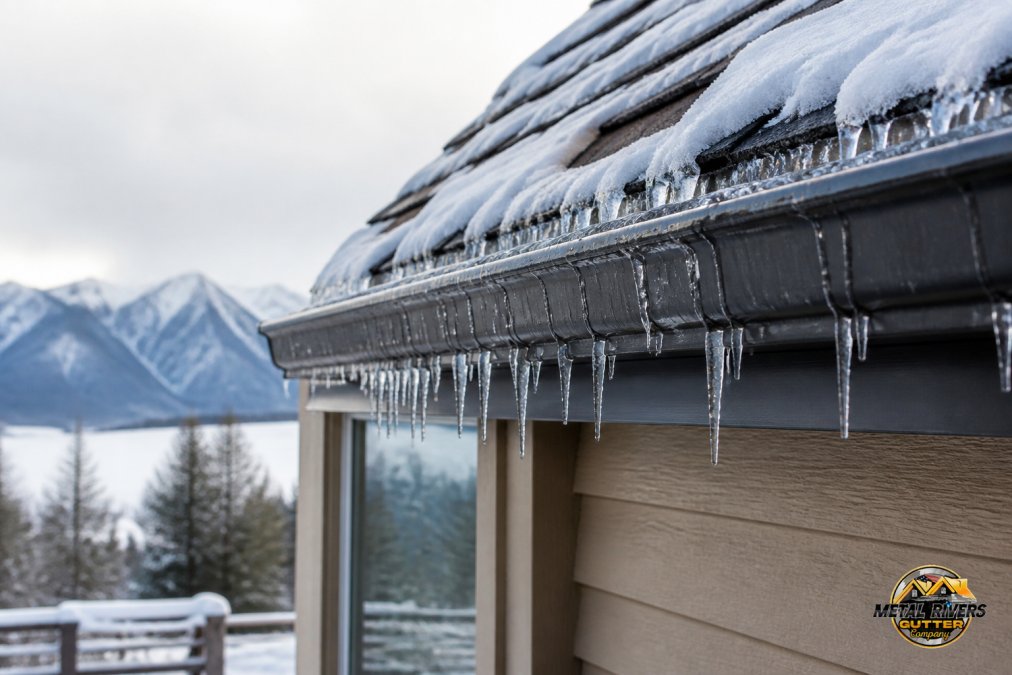
An ice dam forms when snow melts on your roof, water runs down into your gutters, and then refreezes at the edge where it’s colder. The ice builds up. Water backs up behind it. That backed-up water finds cracks in your shingles and seeps into your attic. You end up with water damage, mold, and structural problems that cost thousands to fix.
Seamless gutters reduce ice dam risk: no seams trap debris, continuous design sheds water efficiently, fewer clogs mean better drainage, and on-site downspout placement directs water away from the foundation. Sectional gutters increase risk: seams collect pine needles and leaves, debris creates standing water pockets that freeze, and multiple joints create weak points where ice backs up water.
Example: a homeowner with sectional gutters in a tree-dense area cleans gutters every two weeks during fall, but debris keeps accumulating. Come winter, ice dams form readily. A neighbor with seamless gutters cleans less frequently and experiences fewer ice-related issues.
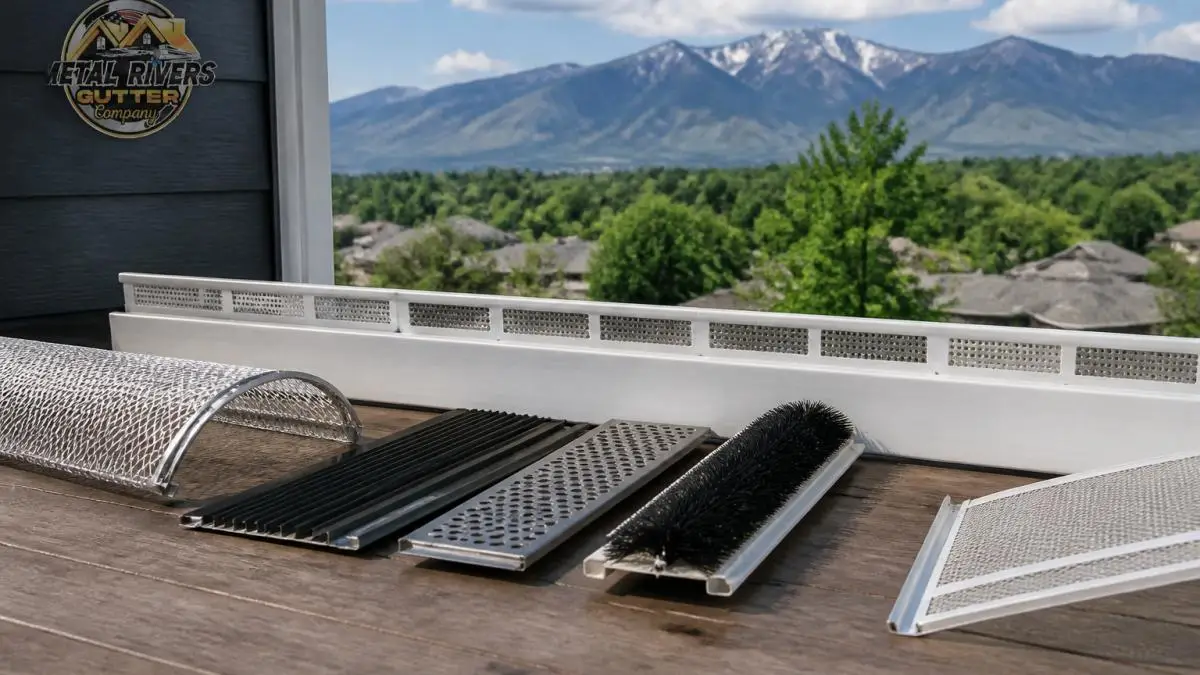
Adding an Upgraded 540 micron gutter guard prevents debris from entering in the first place, but works best on seamless systems where water flow is already optimal.
Hidden Costs and Regional Labor Rate Variance
Most homeowners compare gutter costs by price per linear foot, but the real picture includes regional labor rates, home age, and market conditions.
Regional Labor Rate Variance: What You Actually Pay
Labor costs vary by region: equipment overhead, local competition, seasonal demand, and home complexity all affect pricing.
Retrofitting Costs: The Surprise Line Item
Seasonal Timing and Pricing Pressure
- Fall (September-October): Peak season. Every contractor is booked. Pricing is at its highest because demand exceeds supply. Expect to wait 4-6 weeks for installation.
- Spring (April-May): Second-busiest season. Homeowners are addressing winter damage. Pricing is moderate, and wait times are 2-4 weeks.
- Summer (June-August): Slower season. Contractors have more availability and may offer modest discounts to fill their schedule. However, heat makes roofwork uncomfortable, and some contractors charge a premium for summer labor.
- Winter (November-March): Slowest season. Contractors have maximum availability and may offer discounts, but working in cold, wet, or icy conditions is dangerous and slow. Labor costs often increase to compensate for difficult conditions. In snow-heavy regions, winter installation is sometimes impossible.
Material Selection and Regional Availability
- Aluminum: Lightweight, easy to install, lasts 20-30 years. Most common choice.
- Steel: Heavier, stronger, more durable than aluminum, but requires more skilled installation. Better for heavy-snow regions where ice dam pressure is extreme.
- Copper: Premium material, lasts 50+ years, develops a protective patina. Rarely chosen for cost reasons, but valuable in high-end homes.
The Regional Variance Reality Check
Which Option Makes Sense for Your Home
The right choice depends on three factors: your budget, your home’s complexity, and how long you plan to stay.
Choose seamless gutters if:
- You’re staying in your home for 15+ years
- Your property has trees that drop debris regularly
- You want minimal maintenance and maximum protection
- Winter ice dams are a concern (they are in Northern Colorado)
- You value the peace of mind of a leak-free system
Choose sectional gutters if:
- You’re on a tight budget and need a solution now
- Your home has a simple roof line with minimal angles
- You don’t mind regular maintenance and potential repairs
- You’re planning to sell within 5-10 years
- Your property is in a low-debris area
Get a free gutter inspection before deciding. A professional assessment of your specific home, roof pitch, and drainage needs will clarify which system makes the most financial sense for your situation.
Frequently Asked Questions
How much more does seamless gutter installation cost per foot compared to sectional?
Seamless gutters typically cost more upfront because they’re custom-cut on-site to fit your exact home dimensions, eliminating seams where leaks develop. Sectional gutters are cheaper initially since they use standardized pieces, but the gap narrows when you factor in labor, professional installation, and long-term maintenance. Pricing depends on your home’s complexity, material choice (aluminum versus copper), and local installation rates. Contact Metal Rivers for a free on-site inspection to get an accurate quote for your property.
Why do seamless gutters perform better at preventing ice dams in winter?
Seamless gutters have no joints or seams where debris accumulates and ice forms. In winter, ice dams develop when debris blocks water flow, trapping meltwater that refreezes at the roof edge. Sectional gutters have multiple connection points where leaves, pine needles, and ice can lodge, creating dangerous ice buildup that damages fascia and soffit. A properly installed seamless system with downspouts angled away from your foundation reduces ice formation and protects your home from winter water damage.
What’s the typical lifespan difference between seamless and sectional gutters?
Seamless aluminum gutters last 20-30 years with proper maintenance, while sectional gutters typically last 10-15 years before joints fail and leaks develop. Copper seamless systems can last 40-50 years or longer. Sectional gutters deteriorate faster because seams and joints weaken from freeze-thaw cycles, corrosion, and sealant failure. The longer lifespan of seamless gutters means fewer replacement cycles and better protection for your home’s structural integrity over time.
Will new gutters actually stop water damage if my house already has foundation issues?
Yes. Gutters prevent new water damage from accumulating around your foundation. Even if existing damage exists, properly installed seamless gutters with downspouts directing water 4-6 feet away from your home stop additional moisture infiltration. This prevents further deterioration and protects the rest of your foundation. A free on-site inspection can identify how water currently flows around your home and whether gutter upgrades will address your specific concerns.