
Table of Contents
- How Gutters and Foundation Damage Are Connected
- 8 Warning Signs Your Gutters Are Damaging Foundation
- Gutter Downspout Extension Requirements Every Homeowner Should Know
- How to Install Exterior Drain Tile Step by Step
- Preventing Ice Dams in Gutters During Winter
- DIY Diagnostic Checklist for Foundation Water Damage
- Repair or Replace? A Cost-Benefit Guide for Damaging Gutters
- Frequently Asked Questions
Last Updated: September 30, 2026
How Gutters and Foundation Damage Are Connected
The signs your gutters are damaging foundation show up long before you notice a crack in the basement wall. By the time water is pooling against your house, the soil around it has been soaking for weeks or months. This guide from Metal Rivers Gutter Company walks through the warning signs, what they mean, and how to fix them before real structural damage sets in.
Gutter failure and foundation damage are connected by one simple thing: where the water goes. A working gutter system catches roof runoff and moves it away from the house. A failing one dumps it right where you don’t want it.
Foundation damage is the weakening of a home’s structural base caused by water, soil movement, or settling. When gutters stop doing their job, water saturates the soil next to the foundation, and that saturated soil pushes against the walls or washes away supporting dirt.
The Path Water Takes When Gutters Fail
Water always follows the path of least resistance. When a gutter is clogged or sagging, runoff spills over the edge instead of flowing to the downspout. That water lands in a strip along the house, soaks into the soil, and creates hydrostatic pressure against the foundation wall.
Over time, that pressure finds every weak spot. It seeps through cracks, pushes against basement walls, and erodes the soil that’s supposed to hold your foundation steady. A common mistake is treating a wet basement as a plumbing problem when the real source is up on the roof.
Ignoring a clogged gutter for one season can lead to soil saturation that takes years to correct. The fix is cheap now and expensive later.
8 Warning Signs Your Gutters Are Damaging Foundation
Watch for these eight signs, ranked from easiest to spot to the ones that need a closer look. If you catch two or more, it’s time for a professional inspection. But don’t just check boxes, each sign tells you something different about how water is moving through your soil and against your foundation. Here’s what each one actually means.
- Water pooling near the foundation after every rain
- Basement moisture or a musty smell that won’t go away
- White chalky stains (efflorescence) on foundation walls
- New cracks in the foundation or basement walls
- Soil erosion creating a trench along the house
- Sagging or pulling gutters separated from the fascia board
- Gutter overflow during even moderate rain
- Grading that slopes toward the house instead of away
Water Pooling Near the Foundation
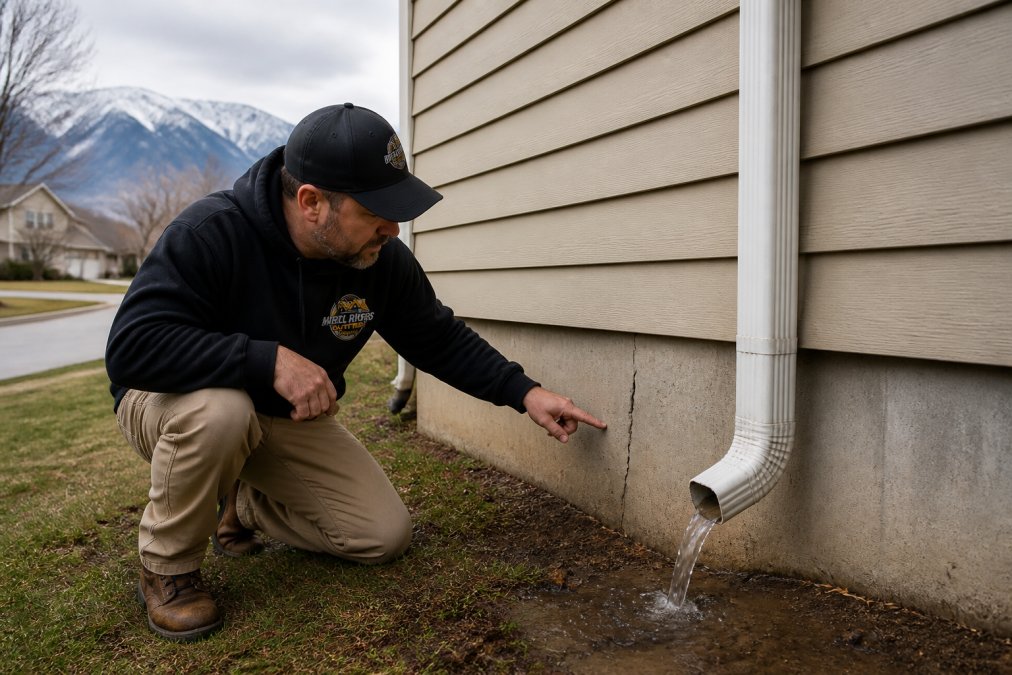
Standing water within a few feet of your foundation is the clearest early warning. It usually means a downspout is discharging too close to the house or a gutter is overflowing at that spot. Water pooling here is the number one driver of basement seepage.
But what that water does next depends on your soil.
Basement Moisture, Efflorescence, and Foundation Cracks
Efflorescence is the white, chalky residue left behind when water moves through concrete and evaporates, leaving mineral salts on the surface. It’s a visible trail that tells you moisture is traveling through the wall. Pair it with a damp crawl space or new foundation cracks, and you’ve got water finding its way in.
Sagging Gutters, Soil Erosion, and Grading Problems
A gutter that sags or pulls away from the fascia board can’t drain properly. Water spills over the front, hits the ground, and starts carving away soil. Over time, that erosion changes your grading so the ground slopes toward the house instead of away, which makes every future storm worse.
Walk your property during a steady rain. You’ll spot overflow, bad pitch, and pooling in minutes, things that are invisible on a dry day. Pay attention to where the water actually goes, not just where it comes out.
Gutter Downspout Extension Requirements Every Homeowner Should Know
Gutter downspout extension requirements come down to one rule: get water at least 4 to 6 feet away from the foundation, and farther on sloped or clay-heavy ground. Short extensions that dump water at the base of the wall defeat the whole system.
Check these points on your own setup:
- Extensions reach at least 4-6 feet from the foundation
- Water discharges onto a splash block or graded slope, not bare soil against the wall
- Downspouts are clear and flowing freely
- Extensions are secured so lawn equipment doesn’t knock them loose
How to Install Exterior Drain Tile Step by Step
Learning how to install exterior drain tile step by step gives you a permanent way to move groundwater away from the foundation. This is a bigger job than adding a downspout extension, and it’s worth doing right.
Tools and Materials You’ll Need
- Perforated drain tile pipe
- Filter fabric or gravel sock
- Washed gravel
- Trencher or shovel
- Landscape fabric
- Downspout adapter to tie gutters into the system
The Steps
- Dig the trench. Run it along the foundation footing, sloping away from the house at about 1 inch per 8 feet.
- Line the trench with landscape fabric to keep soil out of the gravel.
- Add a gravel base a few inches deep.
- Lay the perforated pipe with holes facing down, sloping toward a discharge point or sump.
- Connect downspouts so roof water feeds into the same system.
- Cover with gravel, then wrap the fabric over the top.
- Backfill with soil and restore your grading so it slopes away from the house.
Expected Result: Groundwater and roof runoff both exit through one controlled discharge point, keeping the soil around your foundation dry.
Preventing Ice Dams in Gutters During Winter
Preventing ice dams in gutters during winter starts with keeping water moving. When meltwater refreezes at the gutter edge, it backs up under the shingles and eventually finds its way inside.
- Ice dams form when snow on the roof melts, runs to the cold eave, and refreezes
- Ice-filled gutters get heavy and pull loose from the fascia
- Freeze-thaw cycles crack seams and split downspouts
- Icicles signal water is backing up instead of draining
DIY Diagnostic Checklist for Foundation Water Damage
You can run a solid diagnostic in about an hour with no special tools. Grab a notepad, walk the perimeter, and check each item.
- Gutters are firmly attached with no sagging or gaps at the fascia
- No visible rust, holes, or seam leaks
- Downspouts discharge 4-6 feet from the foundation
- No standing water or soft, spongy soil near the walls
- Grading slopes away from the house on all sides
- Basement and crawl space are dry, with no musty odor
- No white efflorescence or new cracks on foundation walls
- No water stains or peeling paint on the lower siding
Repair or Replace? A Cost-Benefit Guide for Damaging Gutters
Repair makes sense for isolated problems; replacement wins when the whole system is failing. But the real question isn’t just what the gutter work costs, it’s what you’re risking if you put it off. Foundation repair is one of the most expensive home repairs there is, and it’s almost always preventable when the gutter system is doing its job. Use this table to sort out which camp you’re in, then think about the downside of guessing wrong.
| Problem | Best Fix | Why |
|---|---|---|
| One loose hanger | Repair | Cheap, fast, no system change |
| Small seam leak | Repair | Seals with a patch or sealant |
| Sagging along one run | Repair or replace | Depends on age and number of hangers |
| Cracks every few feet | Replace | Patching won’t hold long |
| Rust-through or holes | Replace | Metal is failing system-wide |
| Overflow from clogs only | Clean or add guards | Drains fine once clear |
The cheapest gutter decision is the one that keeps water away from your foundation. Repair when the system is sound, replace when it’s failing, and don’t let a few hundred dollars in gutter work turn into a five-figure foundation bill.
Frequently Asked Questions
Can bad gutters cause foundation problems?
Yes. When gutters clog, sag, or dump water too close to the house, that runoff saturates the soil around your foundation. Saturated soil expands, then shrinks as it dries, and that cycle creates hydrostatic pressure against basement walls. Over time you get foundation cracks, basement seepage, and settlement. Keeping gutters clear and extending downspouts at least 4 to 6 feet away from the foundation is one of the cheapest ways to prevent structural damage.
What are the first signs of foundation problems from gutter failure?
Watch for water pooling near the foundation after rain, white chalky stains (efflorescence) on basement walls, musty smells in the basement or crawl space, new cracks in drywall or brick, and doors or windows that suddenly stick. Outside, check for soil erosion around the slab, sagging gutters pulling away from the fascia, and gutters that overflow during even moderate rain. Any two of these together usually means your gutters are damaging foundation soil.
Do ice dams in winter contribute to foundation settling?
They can. Ice dams form when clogged gutters trap snowmelt that refreezes at the roof edge. The ice backs water up under shingles and forces meltwater down the exterior walls, where it pools at the foundation. Repeated freeze-thaw cycles saturate the soil, and that saturation combined with frost heave can shift footings. Preventing ice dams in gutters with proper pitch, gutter guards, and attic insulation cuts that risk significantly.
Will homeowners insurance cover gutter damage to my foundation?
Most policies cover sudden, accidental water damage but exclude damage from deferred maintenance, which is how insurers usually classify clogged or sagging gutters. That means foundation repair tied to long-term gutter neglect is often denied. Document your maintenance, keep receipts for gutter cleaning or repairs, and address small issues fast. If a storm directly damages your gutters and water then hits the foundation, that claim has a much better chance of being approved.