


Table of Contents
- Aluminum vs Copper Gutters: Quick Comparison
- Aluminum Gutter Lifespan and What Affects It
- Copper Gutter Lifespan: The Long-Term Play
- Copper Gutter Maintenance: Keeping It Clean and Functional
- Winter Gutter Durability: Ice, Snow, and System Stress
- Corrosion, Rust, and Weather Resistance
- Lifecycle Cost and Long-Term Value
- Conclusion: Which Material Is Right for Your Home
- Frequently Asked Questions
Last Updated: October 18, 2026
Aluminum vs Copper Gutters: Quick Comparison
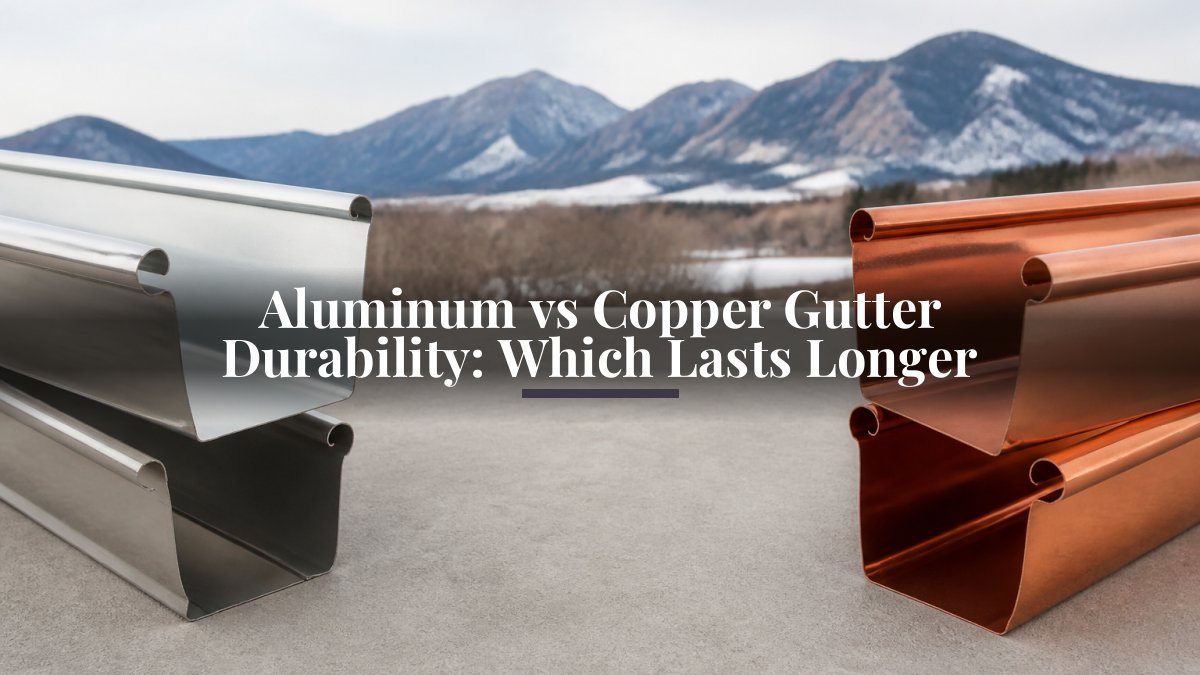
When you’re deciding between aluminum and copper gutters, you’re really asking: how long do I want this system to last, and what can I afford right now? Both materials protect your home from water damage, but they perform very differently over time. Aluminum vs copper gutter durability comes down to lifespan, maintenance demands, and how you value your investment over decades.
Here’s the straightforward comparison: aluminum gutters typically serve homes well for 20 to 30 years, while copper gutters can last 50 to 100 years. That’s a significant difference. But the choice isn’t just about raw longevity. It’s about what happens in between, how much upkeep each material demands, how they handle the freeze-thaw cycles we see up here in Northern Colorado, and whether the premium cost of copper makes sense for your specific situation.
At Metal Rivers Gutter Company, we install both materials regularly, and we’ve learned that the “best” choice depends less on the material itself and more on your home’s exposure, your maintenance tolerance, and your long-term plans for the property.
Aluminum lasts 20-30 years and requires minimal maintenance. Copper lasts 50-100 years but demands regular cleaning and upkeep. The choice hinges on how long you plan to stay in your home and how much maintenance you’re willing to do.
| Material | Typical Lifespan | Maintenance Level | Best For |
|---|---|---|---|
| Aluminum | 20-30 years | Low | Budget-conscious homeowners, shorter ownership horizons |
| Copper | 50-100 years | Moderate to high | Long-term homeowners, premium appearance priority |
Aluminum Gutter Lifespan and What Affects It
Aluminum gutters are engineered to resist rust, which is why they hold up reasonably well without constant attention. Most aluminum systems last between 20 and 30 years, though some homeowners report getting closer to 35 years with proper care.
What determines how long yours will actually last? Gutters that are pitched incorrectly, fastened with the wrong hardware, or sealed poorly at seams will fail faster than that 20-to-30-year window suggests. Seamless gutters cut on-site, like what we install at Metal Rivers Gutter Company, eliminate seams entirely, which removes one of the biggest failure points.
Climate plays a role too. In Northern Colorado, our freeze-thaw cycles put stress on any gutter system. When water pools in aluminum gutters and freezes, the ice expands. Repeated freezing and thawing can stress fasteners and cause seams to separate.
Debris accumulation also shortens lifespan. Gutters clogged with leaves, pine needles, and sediment hold moisture against the aluminum. That moisture, combined with organic matter, can create an acidic environment that corrodes even rust-resistant aluminum. A gutter guard reduces this problem significantly, though it doesn’t eliminate it entirely.
The takeaway: aluminum’s 20-to-30-year lifespan assumes proper installation, adequate pitch, regular cleaning, and a climate that isn’t too harsh. In our area, with proper maintenance and seamless installation, you’re likely looking at the higher end of that range.
Copper Gutter Lifespan: The Long-Term Play
Copper gutters represent a fundamentally different investment. Where aluminum is engineered for a predictable 20-to-30-year service life, copper is built for the long haul, typically 50 to 100 years.
Why the dramatic difference? Copper is naturally resistant to corrosion in ways aluminum simply isn’t. Aluminum resists rust through its oxide layer, but that layer is fragile. Copper develops a protective patina, that blue-green coating you see on old copper roofs and gutters, that actually strengthens the material’s corrosion resistance over time. This patina is nature’s way of sealing the surface.
That said, copper’s lifespan depends on environment. In coastal areas with salt air, copper can corrode faster. In inland climates like ours, copper thrives. The freeze-thaw cycles that stress aluminum gutters don’t affect copper the same way. Copper expands and contracts with temperature changes, but it does so predictably without the brittleness that can make aluminum fasteners fail.
Installation quality still matters. Even copper gutters will fail prematurely if they’re installed with poor pitch, wrong fasteners, or inadequate sealing. But the material itself is more forgiving. A copper gutter that sits undisturbed for 50 years will likely outlast an aluminum gutter that receives excellent care.
Copper’s protective patina develops over 3-5 years. During this time, the gutter may look dull or streaky. That’s not a defect, it’s the material hardening itself against corrosion. Once the patina is fully established, your copper gutters become even more durable.
Copper Gutter Maintenance: Keeping It Clean and Functional
Here’s where copper’s premium lifespan comes with a trade-off: maintenance. Copper gutters demand more attention than aluminum, especially in our tree-dense neighborhoods around Fort Collins.
The biggest maintenance task is keeping debris out. Copper’s long lifespan means you could have the same gutters for 50+ years, so protecting them from clogging becomes a long-term commitment. Leaves, pine needles, and sediment sitting in copper gutters create the same acidic environment they do in aluminum, and that can accelerate patina formation in ways that look unsightly.
Many homeowners add gutter guards to copper systems, an upgraded 540 micron gutter guard, for example, can reduce debris significantly. But even with a guard, twice-yearly cleaning (spring and fall) is standard practice for copper in areas with heavy tree coverage.
Copper also needs occasional inspection for fastener corrosion. While the copper itself resists corrosion beautifully, steel fasteners can rust if they’re not stainless steel or copper-coated. A corroded fastener can eventually fail, allowing the gutter to sag. This is a minor maintenance item, but it’s worth knowing about.
The patina itself requires no maintenance, it’s protective, not a problem. Some homeowners love the weathered look. Others prefer the original bright copper appearance and use specialized cleaners to maintain it. Either choice is fine; the patina doesn’t compromise function.
Winter Gutter Durability: Ice, Snow, and System Stress
Winter is where aluminum vs copper gutter durability really shows itself. Our freeze-thaw cycles up here in Northern Colorado are brutal on gutters, and the material you choose determines how your system handles the stress.
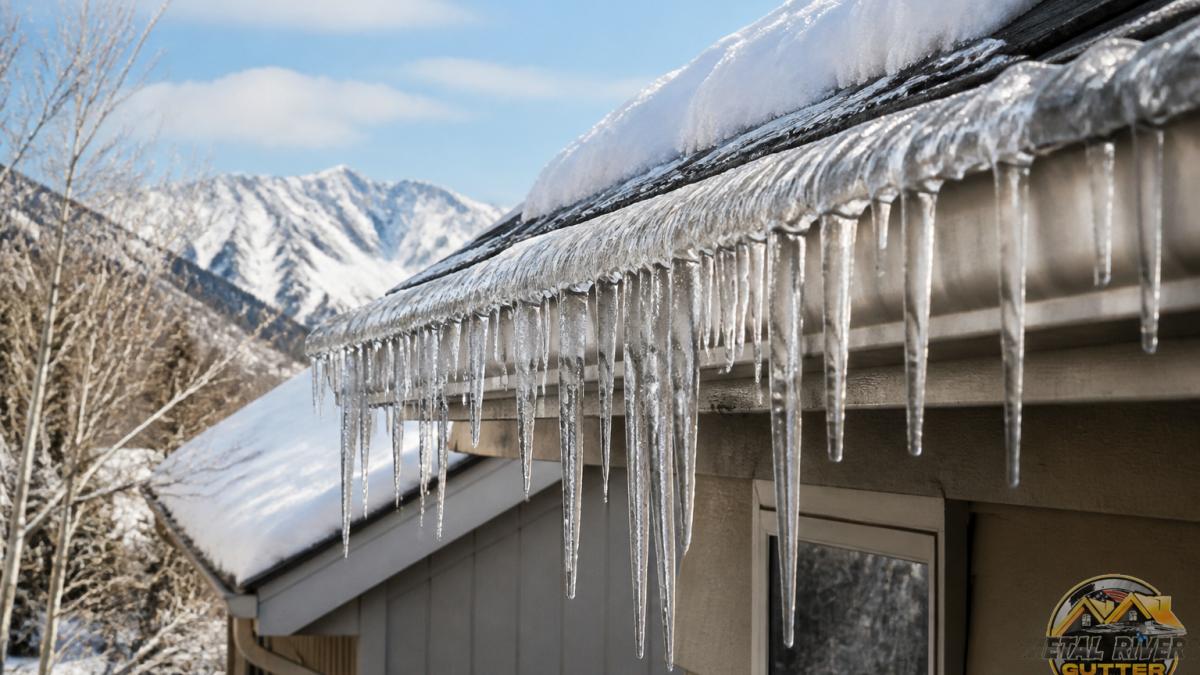
Aluminum gutters face two winter challenges. First, standing water in a poorly pitched gutter freezes and expands, putting lateral pressure on the gutter walls and fasteners.
Copper, being denser and stronger, resists ice-dam-related sagging better. It won’t permanently deform under the weight of ice the way aluminum can. However, copper isn’t immune to ice dams, no gutter material is.
The real winter protection comes from proper installation. Gutters pitched at a minimum slope ensure water drains completely before it freezes. Seamless gutters eliminate seams where ice can work its way in.
One winter hazard people don’t always think about: icicles. When gutters back up with ice, icicles form along the edge.
Another winter stress: snow sliding off the roof. When a heavy snow load shifts and slides, it can impact gutters with significant force. Aluminum gutters can dent or bend from this impact.
A gutter clogged with pine needles in late fall can trap water that freezes solid by December. That frozen blockage prevents drainage all winter, backing water up under your roof shingles. This is one of the most common causes of ice dam-related water damage in our area. Gutter guards help, but they’re not a substitute for seasonal cleaning.
Corrosion, Rust, and Weather Resistance
Aluminum doesn’t rust, it oxidizes. That’s an important distinction. Rust is iron oxide, which is red-brown and flaky. Aluminum oxide is white or chalky and actually protects the underlying metal. So when people say aluminum gutters are “rust-proof,” they’re technically correct.
But oxidation, while not rust, still degrades the appearance and can eventually compromise the material if left unchecked. Aluminum oxide is porous and can allow moisture to penetrate deeper into the metal. In our climate, where we get significant moisture from snowmelt and occasional heavy rains, oxidation can accelerate.
Copper, by contrast, develops a protective patina that actually strengthens over time. This patina is a layer of copper compounds (copper carbonate, copper sulfate, and copper chloride, depending on your environment) that seals the surface and prevents further corrosion. In coastal areas with salt air, this process can work against you, the patina forms faster but can be less stable.
Weather resistance is where copper pulls ahead. Aluminum’s oxide layer can be disrupted by acidic rain, tree sap, or aggressive cleaning. Copper’s patina actually improves with exposure. After 3-5 years, a copper gutter becomes more weather-resistant than it was new.
For homeowners in tree-dense areas, this matters. Falling leaves and pine needles are acidic. Over years, this acidic debris can thin aluminum’s oxide layer if gutters aren’t cleaned regularly. Copper shrugs this off. The patina hardens against it.
Lifecycle Cost and Long-Term Value
Here’s where the aluminum-versus-copper decision gets complicated, because upfront cost and long-term cost are very different numbers.
Aluminum gutters cost significantly less to install than copper. For a typical home, the material difference alone can be several hundred dollars. If you’re planning to sell your home in 10 years, aluminum makes financial sense. You’ll get 10 good years out of it, and the next owner inherits the replacement decision.
But if you’re staying put for 30 years or longer, the math shifts. An aluminum system that lasts 25-30 years means you’re replacing it once, maybe twice, during your ownership. A copper system lasts 50-100 years, which means you might never replace it.
There’s also the maintenance cost to consider. Aluminum gutters require less hands-on maintenance, maybe an annual or biennial cleaning. Copper requires more frequent attention, especially in tree-dense areas. That’s not a huge expense, but it’s time and occasional professional cleaning costs.
Resale value is harder to quantify, but copper gutters do add appeal to buyers who understand their value. A home with copper gutters signals quality and long-term thinking. Aluminum gutters are seen as standard maintenance.
The lifecycle cost question really comes down to this: How long do you plan to stay in your home, and how much are you willing to spend now versus later?
Conclusion: Which Material Is Right for Your Home
Aluminum vs copper gutter durability isn’t a simple winner-take-all comparison. Aluminum wins on upfront cost and minimal maintenance. Copper wins on longevity and weather resistance. The right choice depends on your specific situation.
Choose aluminum if you’re in a shorter ownership horizon, want the lowest upfront cost, and don’t mind scheduling replacement in 25-30 years. Choose copper if you’re planning to stay long-term, value the durability and appearance, and can commit to regular maintenance.
In either case, installation quality matters more than material choice. Seamless gutters cut on-site, proper pitch, stainless or copper fasteners, and adequate slope determine whether your system lasts toward the lower or higher end of its potential lifespan. Metal Rivers Gutter Company installs both materials with the same commitment to precision and durability, custom-cut on-site for a leak-free fit, backed by a 5-year workmanship warranty and manufacturer paint warranties from 20 years up to lifetime.
The best time to think about gutter durability is before you need to. Get a free on-site inspection and let us assess what your home needs.
Frequently Asked Questions
Which lasts longer, aluminum or copper gutters?
Copper gutters typically outlast aluminum by a significant margin. Aluminum gutters generally last 20 to 30 years, while copper gutters can serve 50 to 100 years or more with proper care. This longer service life means fewer replacements over time, though copper requires more regular maintenance to preserve its appearance and function.
How do aluminum and copper gutters compare in winter weather?
Both materials handle winter conditions well, but differently. Aluminum is lightweight, though it can dent from heavy snow or ice chunks sliding off the roof. Copper is heavier and more durable against denting. Proper installation with adequate slope and downspout capacity prevents ice dam issues with either material. Gutter guards help by reducing debris that traps moisture and accelerates freeze-thaw cycles.
How often should copper gutters be maintained?
Copper gutters should be inspected and cleaned at least twice yearly, ideally in spring and fall. Regular cleaning prevents leaf and debris buildup that can trap moisture and accelerate corrosion. If your property has many trees, you may need cleaning more frequently. Checking for loose fasteners, separations, and ensuring downspouts drain freely helps catch small problems before they become costly repairs. A gutter guard can reduce maintenance frequency significantly.
Will copper gutters eventually turn green?
Yes, copper develops a greenish patina over time as it oxidizes. This patina is actually a protective layer that slows further corrosion and helps the metal last longer. Some homeowners appreciate the aged appearance; others prefer the original bright copper look. If you want to slow patina formation, regular gentle cleaning and sealing can help, though this adds to maintenance effort and cost.