Table of Contents
- Gutter Repair vs Replacement: When to Fix and When to Replace
- Signs of Gutter Failure: How to Know Your System Needs Attention
- Common Gutter Materials and Their Durability
- Repair vs Replacement: A Side-by-Side Comparison
- Is Gutter Repair Covered by Home Insurance?
- Preventing Ice Dams With Proper Gutter Maintenance
- DIY vs Professional Installation and Repair
- Making Your Decision: Key Factors to Consider
- Frequently Asked Questions
Last Updated: September 27, 2026
Gutter Repair vs Replacement: When to Fix and When to Replace
A leaky gutter today becomes a foundation problem tomorrow. The decision between patching and replacing comes down to one question: “Is this worth fixing, or should I start over?”
After years of assessing damaged systems across Northern Colorado, we’ve seen the patterns. Some gutters respond well to targeted repairs. Others have crossed the line where repair just delays the inevitable. This guide breaks down how to tell the difference and make the choice that protects your home without wasting money.
Gutter repair vs replacement depends on the extent of damage, the age of your system, and what you’re trying to prevent.
Signs of Gutter Failure: How to Know Your System Needs Attention
Visible Damage and Structural Issues
Start by looking at what you can see. Gutters fail in predictable ways, and catching these signs early can save you from much bigger problems.
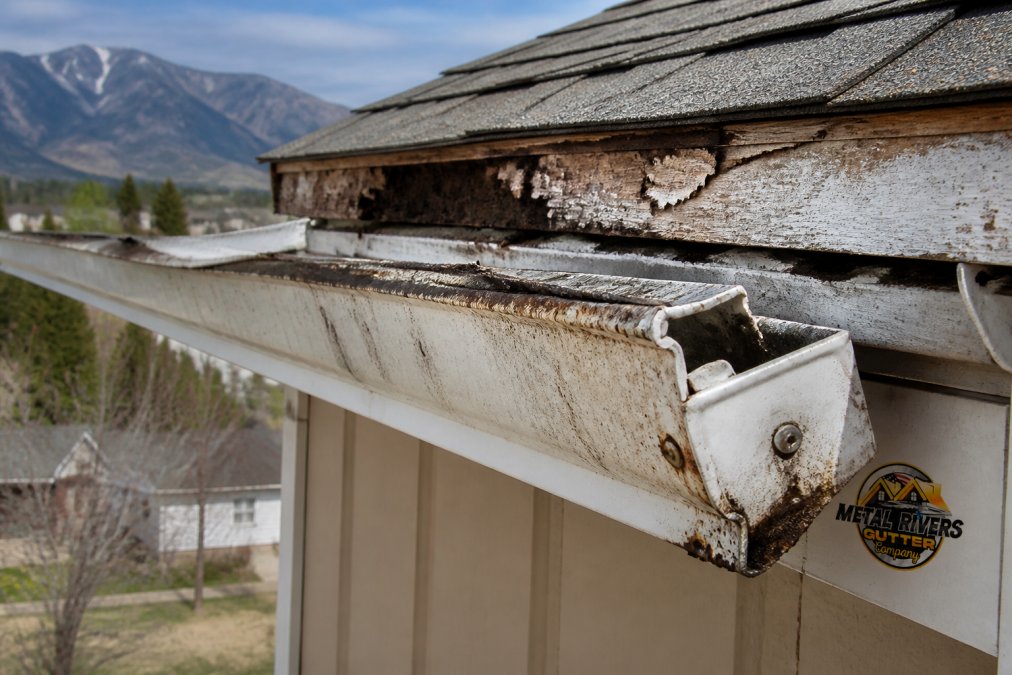
Sagging or pulling away from the fascia board is the most obvious red flag. Standing water gets heavy and pulls the gutter down further until fasteners fail and sections detach. If you see daylight between the gutter and fascia, repair alone won’t hold it, the underlying structure is compromised.
Visible rust or corrosion means the material is breaking down. Rust spots spread from pinhole leaks to larger gaps. Steel and galvanized gutters are particularly vulnerable, especially in areas with heavy moisture or near trees. Once corrosion is visible outside, the damage inside is usually worse.
Loose fasteners and hangers in multiple sections signal a systemic problem, the entire system may be pulling away from the roof line.
Seams and caulking that are cracked or separating mean water is getting behind the gutter system. Seams in sectional gutters are constant trouble spots; seamless gutters eliminate this problem entirely.
Water Damage and Foundation Concerns
Water that escapes your gutter system pools around your foundation, erodes soil, and creates conditions for foundation cracks and basement leaks.
Water pooling near the foundation signals failed gutters. Wet soil, standing water, or erosion patterns near your home’s base weaken the foundation and create entry points for water into your basement or crawl space.
Basement moisture, staining, or mold growth often traces back to failed gutters. Foundation repair costs far more than gutter replacement.
Landscape erosion or soil washout around downspout areas shows water is flowing with force where it shouldn’t. Gutters that overflow or leak create erosion patterns. If you notice gullies, exposed soil, or washed-out areas, your drainage system needs attention.
Common Gutter Materials and Their Durability
Not all gutters are created equal, and the material you have, or choose, affects how long repairs will actually last.
Aluminum gutters are affordable and resist rust, lasting 20-30 years with proper maintenance. Small leaks can be sealed, but once the material fails, patching becomes temporary.
Galvanized steel gutters are strong but vulnerable to rust. Once the galvanizing coating is breached, rust spreads quickly. Repair makes sense early on, but once rust appears, replacement is usually better.
Copper gutters are durable and can last 50+ years. If you have copper gutters, repair is almost always the right call.
Seamless gutters eliminate seam leaks entirely and are custom-cut on-site for a perfect fit. Seamless gutters eliminate seam leaks entirely and are custom-cut on-site for a perfect fit.
Sectional gutters are cheaper upfront but require more maintenance. Those seams are constant trouble spots where water finds its way and caulking fails.
Repair vs Replacement: A Side-by-Side Comparison
Here’s where the real decision lives. Both repair and replacement solve problems, but they solve them differently, and for different lengths of time.
| Factor | Repair | Replacement |
|---|---|---|
| Best for | Localized damage, isolated leaks, minor rust | Widespread damage, multiple failing sections, end-of-life systems |
| Time to complete | 1-3 hours typically | 1-2 days for full system |
| Upfront cost | Lower initial expense | Higher upfront investment |
| How long it lasts | 1-5 years (temporary fix) | 20-50 years depending on material |
| Prevents ice dams | No | Yes, if properly pitched and maintained |
| Fixes foundation issues | Only if damage is new | Resolves the root cause |
| Best for gutters over 20 years old | No | Yes |
When Repair Makes Sense
Repair is the right move when damage is contained and your system is still relatively young.
Isolated leaks at seams or small holes can be sealed. A quality sealant can buy you several more years, especially on aluminum and copper.
Loose fasteners and hangers are straightforward fixes. Tightening or replacing fasteners restores proper pitch and is one of the cheapest repairs.
Minor rust spots on steel or galvanized gutters can be treated with rust-inhibiting sealant if caught early.
Damaged downspouts can be repaired or replaced individually if the gutter itself is sound.
Is the damage isolated to one or two areas, or spread throughout the system? Multiple problems in different sections signal a system in decline.
When Replacement Is the Better Choice
Replacement stops being optional at a certain point. Once your system crosses these thresholds, repair becomes expensive stalling.
Widespread rust or corrosion means the material itself is failing. Replacement removes the problem entirely.
Multiple sagging or detached sections signal that fasteners throughout the system are failing. You need a new system with proper support.
Gutters over 20-25 years old have reached their expected lifespan. Plan for replacement and eliminate the problem for the next 20-30 years.
Recurring leaks in the same spots after repair attempts mean the underlying issue wasn’t fixed. This is especially common with sectional gutters where seams keep failing.
Foundation damage or water intrusion caused by failed gutters demands replacement. A new system with proper slope and capacity prevents future damage.
Gutters incompatible with gutter guards may need replacement if you want to reduce maintenance.
Is Gutter Repair Covered by Home Insurance?
This question comes up constantly, and the answer is frustratingly vague: it depends on your policy and how the damage happened.
Preventing Ice Dams With Proper Gutter Maintenance
In Northern Colorado winters, ice dams are a real threat. When snow melts on your roof and refreezes at the gutter edge, it traps water that backs up under your shingles and leaks into your home. Gutters don’t cause ice dams, but they’re part of preventing them.
DIY vs Professional Installation and Repair
Some gutter work is DIY-friendly. Some isn’t. Knowing the difference saves you money and prevents costly mistakes.
Making Your Decision: Key Factors to Consider
When you’re standing at the crossroads between repair and replacement, these factors should drive your choice.
Frequently Asked Questions
Is gutter repair covered by home insurance?
Coverage depends on your policy and the cause of damage. Most homeowners insurance covers gutter damage from storms or sudden events like falling branches, but not wear-and-tear or neglect. Damage from ice dams may be covered if the backup resulted from a sudden, unforeseen event. Contact your insurer with photos and a damage assessment to file a claim. Keep records of maintenance and professional inspections to strengthen your claim eligibility.
What are the main signs that gutters need replacement instead of repair?
Replace gutters if you see widespread rust or corrosion across multiple sections, sagging that pulls the fascia away from the roof, recurring leaks in the same seams despite repairs, or if the system is over 20 years old. Multiple problem areas, standing water near the foundation, or damage affecting more than 30% of the system usually warrant full replacement. A professional inspection can confirm whether patching will hold or replacement is more cost-effective long-term.
How do I prevent ice dams and winter damage with proper gutter maintenance?
Keep gutters clean and clear of debris before winter arrives so water flows freely and doesn’t pool. Ensure downspouts direct water at least 4-6 feet from your foundation to prevent ice buildup near the home. Proper gutter pitch and unobstructed drainage reduce standing water that freezes into ice dams. In northern climates, consider gutter guards to minimize debris accumulation, and have your system inspected annually. Adequate attic insulation and ventilation also help prevent the freeze-thaw cycle that creates ice dams along the eaves.
How long do seamless gutters typically last?
Seamless gutters generally last 20-25 years or longer with regular maintenance. Proper cleaning, sealant maintenance, and prompt repairs extend lifespan significantly. Harsh winters, heavy tree coverage, and neglected maintenance shorten the system’s life. Professional inspections every few years help catch problems early and maximize your gutter investment.
Can I repair a small leak in my gutter myself?
Small leaks at seams can sometimes be sealed with gutter sealant or caulk as a temporary fix, but professional repair is more reliable. Holes or rust spots require patching or section replacement for a lasting solution. Working at height poses safety risks, and improper repairs may cause worse leaks or water damage later. A professional inspection identifies whether a leak is truly minor or a sign of deeper problems. For peace of mind and a backed warranty, have a professional handle the repair.
Why are my gutters pulling away from the fascia?
Gutters pull away from the fascia when fasteners loosen, the fascia board rots, or the gutter sags under the weight of debris and water. Ice and snow accumulation adds weight that stresses hangers and fasteners. Improper gutter pitch prevents drainage, causing water to pool and create additional strain. Rust and corrosion weaken the gutter material itself. A professional inspection identifies whether tightening fasteners will solve the problem or if the fascia needs repair or the entire system requires replacement.
What’s the average lifespan of a gutter system?
Most gutter systems last 20-25 years with proper maintenance. Climate, maintenance frequency, and debris load all affect longevity. Gutters in areas with heavy tree coverage or harsh winters may need replacement sooner. Regular cleaning, prompt repairs, and professional inspections help you get the maximum lifespan from your system before replacement becomes necessary.