
Table of Contents
- Quick Comparison: Best Gutter Guards for Needles
- Why Pine Needles Are a Nightmare for Your Gutters
- Top Gutter Guards for Pine Needles: Our Picks
- 1. Metal Rivers Gutter Company: Custom Installation with Upgraded 540 Micron Guard
- 2. LeafFilter: Professional-Grade Micro-Mesh
- 3. Raptor Stainless Steel Micro-Mesh: Best DIY Kit
- 4. Alu-Rex Double-Pro: Structural Support Meets Filtration
- 5. EasyOn Gutter Guards: Budget-Friendly Micro-Mesh
- 6. MasterShield: Premium Debris Shedding
- 7. GutterBrush: Simple Drop-In Solution
- Micro-Mesh vs. Perforated Aluminum: Which Works for Needles?
- How to Prevent Ice Dams in Winter with the Right Guards
- DIY vs Professional Gutter Guard Installation: Longevity and Performance
- Maintenance, Resin Buildup, and Roof Pitch Considerations
- Conclusion
- Frequently Asked Questions
Last Updated: September 28, 2026
Quick Comparison: Best Gutter Guards for Needles
The best gutter guards for needles are micro-mesh systems with a fine aperture, because pine needles slip through almost everything else. This guide from Metal Rivers Gutter Company breaks down seven real options.
Here’s the short version before we dig in:
| Product | Type | Best For | Installation |
|---|---|---|---|
| Metal Rivers Gutter Company | Custom seamless + 540 micron guard | Whole-home protection | Professional |
| LeafFilter | Stainless micro-mesh | Permanent pro install | Professional |
| Raptor Stainless Steel | DIY micro-mesh kit | DIYers on 5-inch gutters | DIY |
| Alu-Rex Double-Pro | Continuous hanger + mesh | Sagging gutters | Professional |
| EasyOn | Budget micro-mesh | Tight budgets | DIY |
| MasterShield | Surgical-grade mesh | Heavy needle fall | Professional |
| GutterBrush | Brush insert | Simple short-term fix | DIY |
Quick Picks:
- Best Overall: Metal Rivers Gutter Company, custom-cut seamless gutters with an upgraded 540 micron guard, sized to your roofline.
- Best DIY Kit: Raptor Stainless Steel Micro-Mesh, fine mesh, standard fit, no contractor needed.
- Best Budget: EasyOn Gutter Guards, per-foot pricing that won’t sting.
Why Pine Needles Are a Nightmare for Your Gutters
Pine needles are the worst debris a gutter can face. They’re long, they interlock, and once wet they mat into a dense plug water can’t push through.


The Winter Ice Hazard You Can’t Ignore
Ice dams form when snow on the roof melts, runs to the cold overhang, and refreezes. A clogged gutter traps that water at the edge instead of moving it away.
Top Gutter Guards for Pine Needles: Our Picks
1. Metal Rivers Gutter Company: Custom Installation with Upgraded 540 Micron Guard
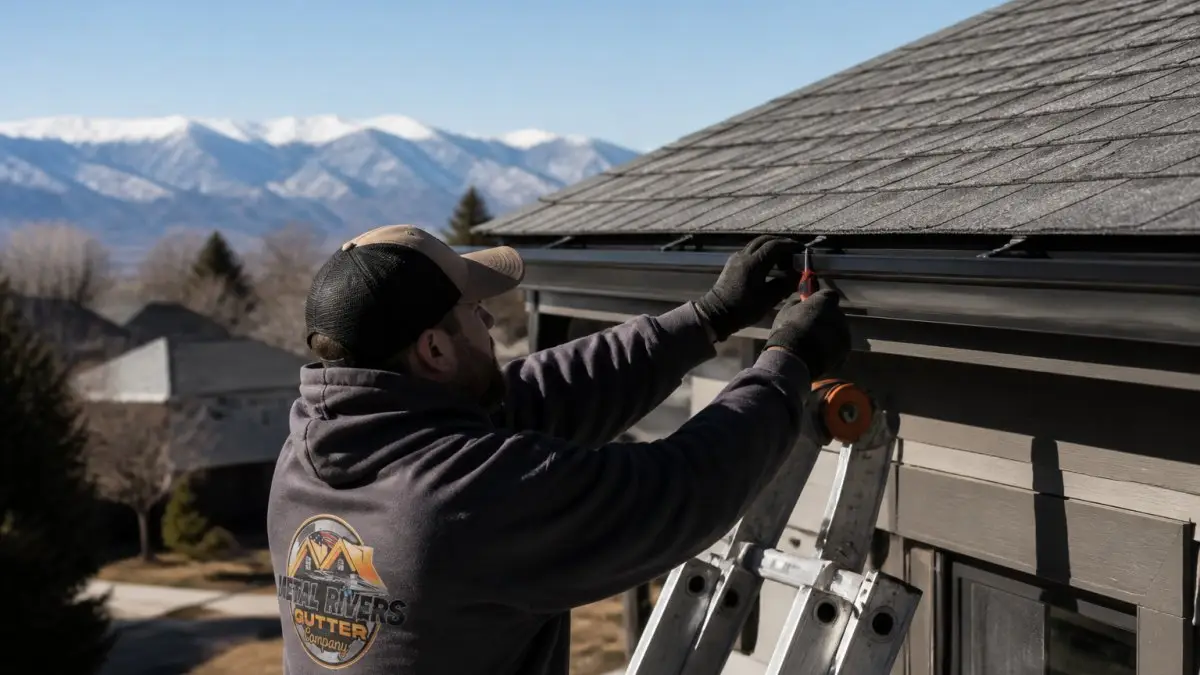
Metal Rivers Gutter Company is our top pick because the guard is matched to the gutter, not squeezed into it. The team cuts seamless aluminum, copper, or galvanized steel on-site, so the run is one continuous piece with no joints to leak.
![Covered by Late Fall Leaves & Pine Needles, Which Gutter Guards are Performing Best? [2025 EP:8]](https://i.ytimg.com/vi/jMtdg00xkDI/hqdefault.jpg)
What we like:
- Seamless gutters cut on-site for a precise, leak-free fit
- Upgraded 540 micron guard sized to your roofline and pitch
- 5-year workmanship warranty
- Manufacturer paint warranties from 20 years up to lifetime
- Free on-site inspections
Ask for the free inspection first. A pro can tell you whether your existing gutters are worth guarding or whether the hangers are already pulling loose. Guarding a failing gutter just hides the problem.
2. LeafFilter: Professional-Grade Micro-Mesh
LeafFilter built its name on stainless steel micro-mesh set in a rigid frame. It handles pine needles well because the mesh is fine enough that needles ride on top instead of wedging in.

3. Raptor Stainless Steel Micro-Mesh: Best DIY Kit
For the homeowner who wants to do the work, Raptor is the practical choice. It uses medical-grade stainless steel mesh, fits standard 5-inch gutters, and comes with the hardware you need.
4. Alu-Rex Double-Pro: Structural Support Meets Filtration
Alu-Rex takes a different angle: the guard doubles as a continuous hanger. If your gutters sag under the weight of wet needles, this reinforces the run while filtering debris.
5. EasyOn Gutter Guards: Budget-Friendly Micro-Mesh
EasyOn offers stainless steel micro-mesh in an aluminum frame at per-foot pricing, generally $1.74 to $4.12 per foot. It fits most standard gutter sizes and ships with self-tapping screws.
6. MasterShield: Premium Debris Shedding
MasterShield uses a surgical-grade stainless steel filter and a self-cleaning pitch design that encourages debris to slide off. For homes under heavy pine canopy, the shedding action is the selling point.
7. GutterBrush: Simple Drop-In Solution
GutterBrush is a cylindrical brush you lay into the channel. Water flows through the bristles; large debris stays out. Installation takes minutes.
Micro-Mesh vs. Perforated Aluminum: Which Works for Needles?
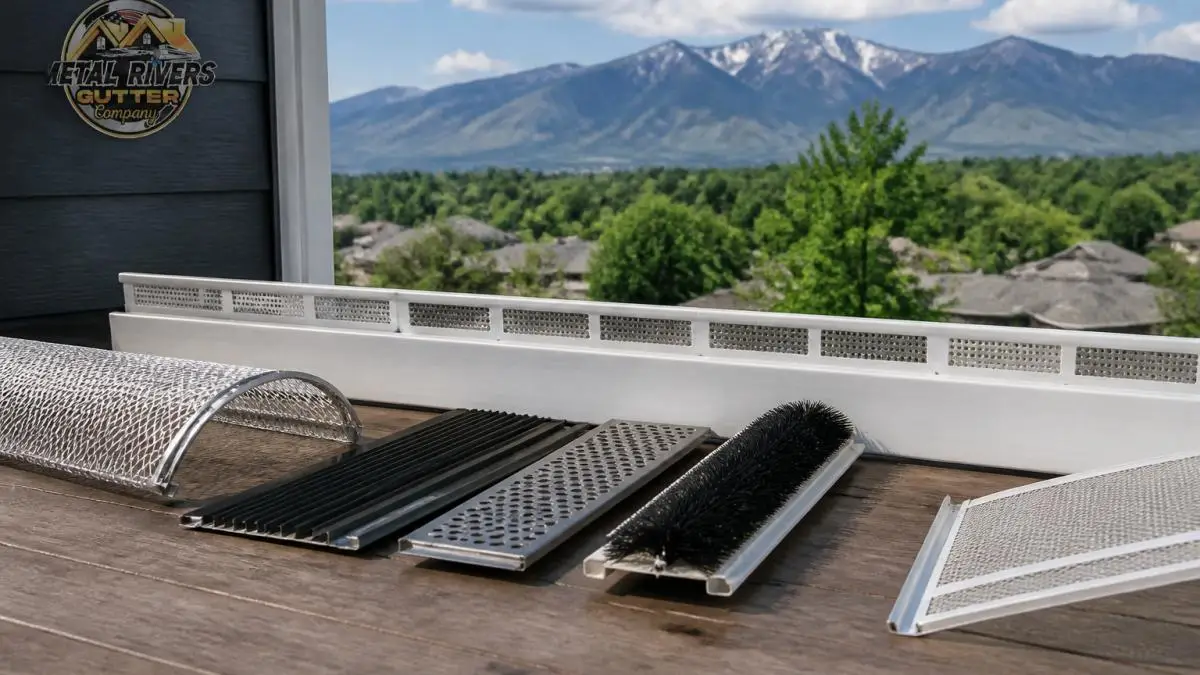
Micro-mesh wins for pine needles, and it isn’t close. Perforated aluminum has larger holes, and a dry pine needle threads straight through them.
| Feature | Micro-Mesh | Perforated Aluminum |
|---|---|---|
| Needle blocking | Excellent | Poor |
| Water flow | High | High |
| Clog risk from fine debris | Low | High |
| Typical cost | Higher | Lower |
| Best for | Pine and fir trees | Leaf-only debris |
Don’t buy a guard based on hole count alone. A “100 holes per square inch” claim sounds impressive, but what matters is whether the aperture is small enough to stop a needle and whether the frame keeps the mesh flat. A sagging mesh panel defeats the whole purpose.
How to Prevent Ice Dams in Winter with the Right Guards
The best way to prevent ice dams in winter is to keep water moving off the roof and away from the house. A guard that stays clear does exactly that.
A few practical steps:
- Clear the roof of needles before the first hard freeze
- Confirm downspouts discharge well away from the foundation
- Check that the guard isn’t holding a layer of debris on top
- Watch the eave line after the first thaw for icicles forming
DIY vs Professional Gutter Guard Installation: Longevity and Performance
DIY gutter guard installation can work fine on a simple, single-story roofline with standard 5-inch gutters. Professional installation pays off on steep pitch, tall eaves, or long runs. But the real difference shows up three to five years down the road, especially on a needle-heavy property.
Where DIY Guards Fail First
Snap-on and drop-in guards have a predictable failure pattern in pine country:
- Year one: Everything looks great. Needles ride on top, water flows, you’re feeling proud.
- Year two: Fasteners back out from thermal cycling, the freeze-thaw expansion and contraction that happens dozens of times each winter. Small gaps open at the ends and corners.
- Year three: Needles find those gaps, wick moisture under the guard, and the mat starts forming in the channel where you can’t see it.
- Year four: The gutter sags under the weight of wet needles and trapped ice. The guard now hides a problem instead of preventing one.
What Professional Installation Actually Buys You
A pro installation isn’t just about saving you a ladder climb. It’s about:
- Custom-cut lengths that eliminate end gaps where needles enter
- Pitch-matched profiles so the guard sheds debris at the same angle as your roof
- Proper fastener placement into solid fascia, not just the gutter lip
- Sealed seams at corners and downspout transitions
- A workmanship warranty that covers the installation itself, not just the materials
The Longevity Math
Here’s the honest trade-off. A DIY micro-mesh kit might run a few hundred dollars for an average home. A professional install costs more upfront. But if the DIY guard needs replacing in four years and the pro install lasts fifteen, the annual cost flips.
When DIY Makes Sense
DIY is still the right call if:
- Your roof is single-story and walkable
- Your gutters are standard 5-inch K-style in good condition
- You have a helper and a stable ladder setup
- You’re comfortable re-checking the installation every fall
When to Call a Pro
Bring in a crew if:
- Your roof pitch is steep enough that you don’t want to be up there
- Your gutters are already sagging or pulling away from the fascia
- You’ve had water in the basement or ice dams in past winters
- Your roofline has multiple valleys, dormers, or complex transitions
- You want a warranty that covers the installation, not just the parts
If your gutters are already pulling loose or leaking at the seams, a pro can handle the gutter and downspout repair before the new guard goes on, so you’re not covering up a problem that’s only going to get worse.
Fit beats brand every time. A well-fitted budget guard outperforms a premium guard installed crooked, because needles find every gap. But on a needle-heavy property, the gap between a good DIY job and a professional install widens every year.
Maintenance, Resin Buildup, and Roof Pitch Considerations
Even the best guard needs a look-over once or twice a year. But here’s what most guides won’t tell you: pine resin is the real enemy, not the needles themselves.
Why Resin Is the Silent Killer of Micro-Mesh
Pine needles carry sap, a sticky, terpene-rich resin that hardens as it oxidizes. When needles slide across a stainless mesh, they leave a micro-film of resin behind. That film grabs dust, shingle grit, and pollen. Over a season or two, the mesh that started with a 540-micron aperture effectively narrows to half that.
- Warm water first. A garden hose on a warm afternoon softens the resin enough that it releases from the weave. Cold water just smears it around.
- Dish soap for stubborn spots. A few drops of grease-cutting dish soap in a spray bottle breaks the resin’s grip. Let it sit five minutes, then rinse.
- Isopropyl alcohol for glazed mesh. If the mesh feels tacky or looks cloudy, a 50/50 mix of isopropyl alcohol and water dissolves the resin film without harming stainless steel or aluminum frames.
- Soft brush only. A nylon-bristle brush works the resin out of the weave. Never use a wire brush, it scratches the mesh and creates anchor points for future buildup.
Skip the pressure washer. High-pressure water can stretch and distort fine stainless mesh, and once the weave is stretched, needles push through. A garden hose and a soft brush do the job safely.
How Roof Pitch Changes Everything
Needles don’t behave the same on every roof. Pitch, the angle of the roof, determines whether debris slides off the guard or parks on top of it.
- Steep pitch (8/12 and above): Needles tumble down the roof and hit the guard with enough momentum to roll off the edge. A micro-mesh guard with a low-profile frame works great here because there’s nothing for debris to catch on.
- Moderate pitch (5/12 to 7/12): The sweet spot for most homes. Needles slide but slow down near the eave. A guard with a slight forward tilt, sometimes called a self-shedding pitch, keeps them moving.
- Low pitch (4/12 and below): This is where needles win. They land on the guard and just sit there. Moisture wicks into the mesh, resin cures, and you’ve got a felt-like mat bonded to the surface. If your roof is shallow, choose a guard with a steeper internal profile and plan on checking it every three to four months, not twice a year.
If you’re not sure about your pitch, snap a photo from the ground at the eave line and show it to your installer. Most pros can eyeball it in seconds and recommend a guard profile that matches.
The Winter Payoff
All this maintenance talk has a winter purpose. A resin-glazed or needle-packed guard traps meltwater at the eave. That water refreezes overnight, expands, and starts working its way under the shingles. Next thing you know, you’ve got an ice dam the size of a canoe paddle hanging off your roofline, and the meltwater behind it is looking for a way into your attic.
Conclusion
Pine needles and winter ice are a rough combination, and a clogged gutter is what turns a nuisance into a ceiling stain. The right guard, fitted properly, keeps water moving and keeps ice from building at the eave.
Frequently Asked Questions
Do micro-mesh gutter guards effectively block pine needles?
Yes, micro-mesh gutter guards are the most effective option for pine needles. Their fine stainless steel mesh, often rated at 540 microns or smaller, catches needles while letting water flow through. Unlike standard screens, micro-mesh prevents needles from slipping into the gutter and causing clogs. For homes with heavy pine needle fall, a professionally installed micro-mesh system is your best bet.
How often do gutter guards need to be cleaned if you have pine trees?
Even with the best gutter guards, you’ll need to clean the surface occasionally. Pine needles can pile up on top of the mesh, especially after a storm. Plan to check your gutters at least twice a year, in spring and fall. If you notice needles accumulating, a quick brush-off or gentle rinse is usually enough. Professional inspections can catch resin buildup that you might miss.
Will standard gutter screens stop pine needles?
Standard gutter screens with large holes won’t stop pine needles. Needles are thin and can slip right through the openings, leading to clogs in your downspouts. Perforated aluminum guards with larger holes have the same problem. For pine needles, you need a micro-mesh guard with a fine aperture. Otherwise, you’re just inviting debris into your gutter system.
Are gutter guards worth it for homes with pine trees?
Absolutely. Gutter guards reduce the frequency of cleanings and help prevent ice dams in winter. Pine needles mixed with water can freeze and block water flow, leading to overflow and potential foundation damage. A quality guard keeps needles out, so water drains properly. While there’s an upfront cost, it saves you time and money on repairs down the road.
How does roof pitch affect gutter guard performance?
Roof pitch plays a big role in how well gutter guards shed debris. Steeper roofs cause water and needles to slide off faster, which can overwhelm some guards. For steep pitches, choose a guard with a high flow-through rate and a design that handles fast water. Professional installers can recommend the right guard for your roof’s slope to ensure long-term durability.