
Table of Contents
- Why Cleaning Gutters Before Winter Matters
- How Clogged Gutters Lead to Ice Dams and Winter Damage
- Step-by-Step: How to Clean Downspouts and Gutters
- Gutter Cleaning Tools You’ll Need
- How to Prevent Ice Dams in Winter
- Safety First: Cleaning Gutters in Cold and Icy Conditions
- When to Schedule Gutter Cleaning Before Winter
- Frequently Asked Questions
Last Updated: October 15, 2026
Why Cleaning Gutters Before Winter Matters
You should clean gutters before winter, it’s one of the smartest things you can do for your home. When leaves, twigs, and debris pile up, water can’t flow freely.
In a harsh freeze-thaw cycle, water backs up behind the ice, seeps under your shingles, and drains into your attic and walls. That’s water damage that can cost thousands.
The stakes climb higher with heavy snow.
Clean your gutters in late fall, ideally before the first freeze. This single step prevents a lot of winter water damage.
How Clogged Gutters Lead to Ice Dams and Winter Damage
An ice dam forms when water can’t drain off your roof. Leaves and debris block your gutters and downspouts, so meltwater pools at the eaves. Overnight temperatures drop, that water freezes solid, and the next day’s melt backs up behind the ice and seeps under your shingles.
But here’s the part most folks get wrong, and it’s the part that actually matters: clean gutters alone will not stop ice dams. Gutters are the drainage path. They are not the cause. The real engine behind an ice dam is a warm roof.
The Real Cause: A Warm Roof, Not a Dirty Gutter
Your attic should stay close to the outdoor temperature. When it doesn’t, warm air escaping into the attic heats the roof deck from underneath. Snow on the upper roof melts, runs down to the cold eaves, refreezes, and backs water up under your shingles.
So you’ve got two separate problems that look the same from the ground:
- A clogged gutter or downspout traps water that should have drained away. This makes an existing ice problem worse and can cause overflow damage on its own.
- A warm roof from poor insulation or ventilation creates the meltwater in the first place. This is the root cause of most serious ice dams.
If you clean your gutters every fall and still get ice dams, the gutters aren’t your problem. Your attic is. Look for these signs of heat loss:
- Uneven snowmelt on the roof, with bare patches up high and snow piled at the edges
- Icicles forming along the eaves even after a fresh cleaning
- A warm attic in winter, or insulation that looks compressed, damp, or thin
- Frost on the underside of roof sheathing
Most building-science folks say the fix is air sealing and insulation first, ventilation second. Seal gaps around light fixtures, attic hatches, and plumbing penetrations, then make sure you’ve got intake at the soffits and exhaust at the ridge or gable.
The Winter Hazards Clogged Gutters Make Worse
Even with a perfect attic, a clogged gutter turns a minor freeze into a real mess. Here’s what we see:
- Ice dams at the eaves. Water trapped behind a debris dam refreezes, then backs up under shingles and into the attic.
- Icicles the size of your arm. Those formations are a warning sign, not decoration. A big one can weigh 10 pounds or more and pull gutters right off the fascia.
- Frozen gutters that crack. Water sitting in a gutter expands when it freezes. That expansion splits seams, pops hangers, and cracks downspouts.
- Ice on the walkway below. Overflow from a clogged gutter drips down and refreezes on your sidewalk or driveway, a slip-and-fall waiting to happen.
- Foundation ice and basement water. When downspouts are blocked, meltwater dumps right against the foundation and refreezes. Come the next thaw, that water finds its way into your basement.
If you clean your gutters faithfully every fall and still get ice dams, stop cleaning and start looking at your attic. Air sealing and insulation are usually the real fix. A gutter company can clear the drainage path, but only proper attic work stops the meltwater at the source.
Step-by-Step: How to Clean Downspouts and Gutters
Cleaning gutters isn’t complicated, but it takes care. Here’s how we’d approach it.
Step 1: Inspect and Remove Debris
Walk around your home and look at your gutters. You’ll see leaves, twigs, pine needles, and dirt, some loose and some matted down and stuck.
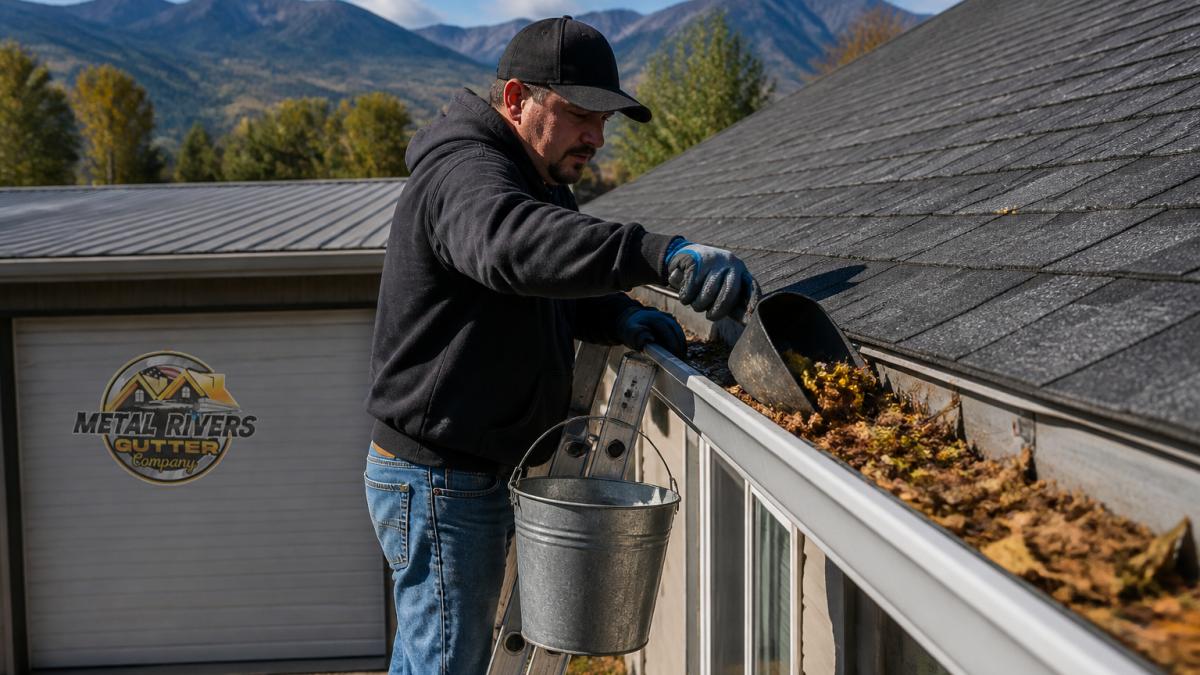
Position a ladder safely under a gutter section and use a gutter scoop or small shovel to pull debris toward you, dropping it into a bucket.
Pay special attention to valleys and corners where gutters meet. Debris collects there. You’ll often find a dam of matted leaves that’s been building up all fall.
Step 2: Clear the Downspouts
Once the gutters are clear, water still needs a path out. A clogged downspout defeats the whole purpose of cleaning your gutters.
From the ground, run a hose into the gutter and watch where the water goes. If it backs up or flows slowly, your downspout is blocked.
Remove any visible debris at the top.
Make sure water flows freely from the downspout outlet. Test it with your hose.
Step 3: Check Drainage and Slope
Here’s something many folks miss: gutters need to slope slightly toward the downspout. If water pools mid-run, it won’t drain right. Check this as you clean.
Also check where water exits your downspout. It should drain at least 4 to 6 feet from your foundation. If it’s pooling against your home, add an extension or splash block.
Standing water near your foundation is a direct path to basement flooding and foundation damage.
Gutter Cleaning Tools You’ll Need
You don’t need fancy equipment. Here’s what works:
- Sturdy ladder, A 20-foot extension ladder is standard for most homes. Make sure it’s in good condition.
- Gutter scoop, A small shovel designed for gutters. Costs around $10 to $20. Beats using your hands.
- Work gloves, Leather or nitrile. Wet leaves are slippery.
- Bucket, To catch debris as you pull it from the gutter. Attach it to your ladder with a hook.
- Garden hose, To flush out remaining debris and test drainage.
- Shop vacuum or plumbing snake, For stubborn downspout clogs.
- Safety glasses, Debris can fly up. Protect your eyes.
That’s it. You probably have most of this already.
The right tools make the job faster and safer. A gutter scoop and bucket are your two essentials.
How to Prevent Ice Dams in Winter
Prevention starts with clean gutters. But there’s more to it.
First, make sure your gutters are pitched correctly toward downspouts. Water should flow, not sit.
Second, ensure your downspouts discharge at least 4 to 6 feet away from your foundation.
Third, consider gutter guards if you have trees near your home.
Fourth, check your attic ventilation and insulation. Proper ventilation keeps your roof temperature consistent and reduces the freeze-thaw cycles that create ice dams.
Finally, keep gutters clean. This is the simplest, most effective step you can take.
Safety First: Cleaning Gutters in Cold and Icy Conditions
Here’s where folks get hurt. Wet leaves are slicker than grease, ice on a rung is a trap, frozen gutters are brittle and crack under your hand, and a fall from even 10 feet can put you in the hospital.
Before you climb anything, run through this decision guide.
The Stay-Off-The-Ladder Checklist
Do not climb if any of these are true:
- The temperature is below freezing. Ice hides on rungs, and your hands quit working right in the cold.
- There’s ice or snow on the ground, the ladder feet, or the roof. Wait for a thaw.
- The gutters themselves are frozen solid. You can’t scoop ice, and prying at it cracks the gutter and the seals.
- Winds are gusting over about 20 mph. A ladder can shift, and debris blows back in your face.
- You’re alone. No spotter, no climbing.
- You’re over 60, on blood thinners, or have balance or vertigo issues. This isn’t about pride. It’s about physics.
If you check even one box, the job waits. Cleaning in a January thaw or waiting until spring beats a broken hip every time.
How to Read Unsafe Ice
Not all ice looks the same, and the dangerous stuff doesn’t always announce itself:
- Clear, glassy ice on rungs or the roof is the worst. It’s nearly invisible and has almost no grip.
- White, opaque ice is usually frosted and slightly rougher, but still slick enough to drop you.
- Ice dams at the eaves mean there’s water trapped behind them. Stepping near one can send the whole shelf of ice down on top of you.
- Black ice on the driveway or walkway under your ladder is the quiet killer. If the ground is shiny, stay down.
A good rule: if you have to ask whether the surface is safe, it isn’t.
If You Do Climb: Non-Negotiables
When conditions are genuinely safe, dry day, above freezing, no wind, spotter present, stack the odds in your favor:
- Set the ladder on firm, level ground and use ladder levelers or a stabilizer if the ground slopes.
- Follow the 4-to-1 rule: for every 4 feet of working height, move the base 1 foot out from the wall.
- Extend the ladder at least 3 feet above the gutter line so you have something to hold onto when you step off.
- Keep your hips between the rails. Don’t overreach. Move the ladder instead.
- Wear shoes with real tread, not smooth soles.
- Tie off the ladder at the top if you can.
- Take breaks. Cold hands and tired arms cause falls.
When to Call a Professional
Some jobs just aren’t DIY. Call a pro if:
- Your roof pitch is steep or your gutters are more than two stories up.
- You see sagging gutters, pulled hangers, or separated seams, that’s a repair, not a cleaning.
- There’s already an ice dam built up. Chipping at it yourself can tear shingles and gutters. Pros use steam, not hammers.
- You’ve got a history of falls, a heart condition, or you just don’t feel steady up high.
A professional crew can often clear and inspect a typical home in under an hour and spot damage you’d miss from the ground. That’s money well spent compared to an emergency room visit.
Ladder falls are one of the most common winter home injuries. If you’re over 60, have balance issues, or feel uneasy at height, skip the DIY route entirely. No gutter is worth a trip to the hospital.
When to Schedule Gutter Cleaning Before Winter
Timing matters. You need to clean gutters before winter arrives, ideally before the first hard freeze and heavy snow.
In our region, that means late September through October. If you wait until November, you’re cutting it close.
Mark it on your calendar now. Set a reminder for late September. Don’t let it slide.
If you’re not sure whether your gutters need cleaning, a free inspection is the answer.
Clogged gutters cause real damage in winter.
Frequently Asked Questions
Can clogged gutters cause ice dams?
Yes. When leaves and debris block your gutters, water can’t drain properly. As temperatures drop, standing water freezes, creating ice dams along the roof edge. These dams trap meltwater beneath shingles, which can seep into your attic and cause water damage to your home’s interior and foundation. Cleaning gutters before winter removes the blockages that allow ice dams to form in the first place.
When should you clean gutters before winter?
Clean your gutters in fall, typically September through early November, before the first freeze. This timing lets you remove all leaves and debris before winter weather arrives. If you live in an area with heavy tree coverage, do a second cleaning in late fall. Avoid cleaning during freezing temperatures or on icy conditions, wait for a dry, mild day when it’s safe to work on a ladder.
What tools do you need to clean gutters safely?
You’ll need a sturdy ladder (with a stabilizer bar), work gloves, a gutter scoop or small shovel, a bucket for debris, and a garden hose to flush downspouts. A trowel helps remove stubborn buildup. Consider a gutter guard installation to reduce future cleaning frequency. Always wear safety glasses and have someone spot you while working at height.
How do you safely clear a clogged downspout before freezing weather?
First, remove debris from the gutter opening above the downspout. Then, use a garden hose to flush water through the downspout from the top. If water doesn’t flow, the downspout is blocked, use a plumbing snake or straightened wire to break up the clog. Run water through again to confirm drainage. Make sure water drains at least 4-6 feet away from your foundation to prevent refreezing near the house.