

Last Updated: November 8, 2026
Quick Summary
The right gutter style depends on your roof’s pitch, its drainage area, and your home’s architecture. K-style gutters suit most homes, half-round fits traditional looks, and box gutters fit modern rooflines. Steep or large roofs often need 6-inch gutters or extra downspouts to handle heavy spring storms and winter meltwater.
- Measure your roof area and pitch before comparing gutter capacity ratings.
- Choose seamless construction if your home gets heavy snow or ice.
- Upsize to 6-inch gutters for large or steep roof sections that drain into one run.
- Add downspouts so meltwater does not refreeze into ice sheets on walkways and driveways.
- Check fascia condition first, since rotted wood cannot hold new gutter brackets.
Table of Contents
- Why Gutter Style Matters for Your Roof and Home
- The Main Gutter Styles: K-Style, Half-Round, Box, and Fascia
- Matching Gutter Style to Your Roof Structure and Pitch
- Gutter Types and Sizes: 5-Inch Versus 6-Inch and Seamless Versus Sectional
- Types of Gutter Material and What Works on Metal Roofs
- Types of Gutter Guards and Whether They Stop Pine Needle Clogs
- 10 Tips to Pick the Best Gutter System for Your Home
- Schedule Your Free Gutter Inspection Before Winter
- Frequently Asked Questions
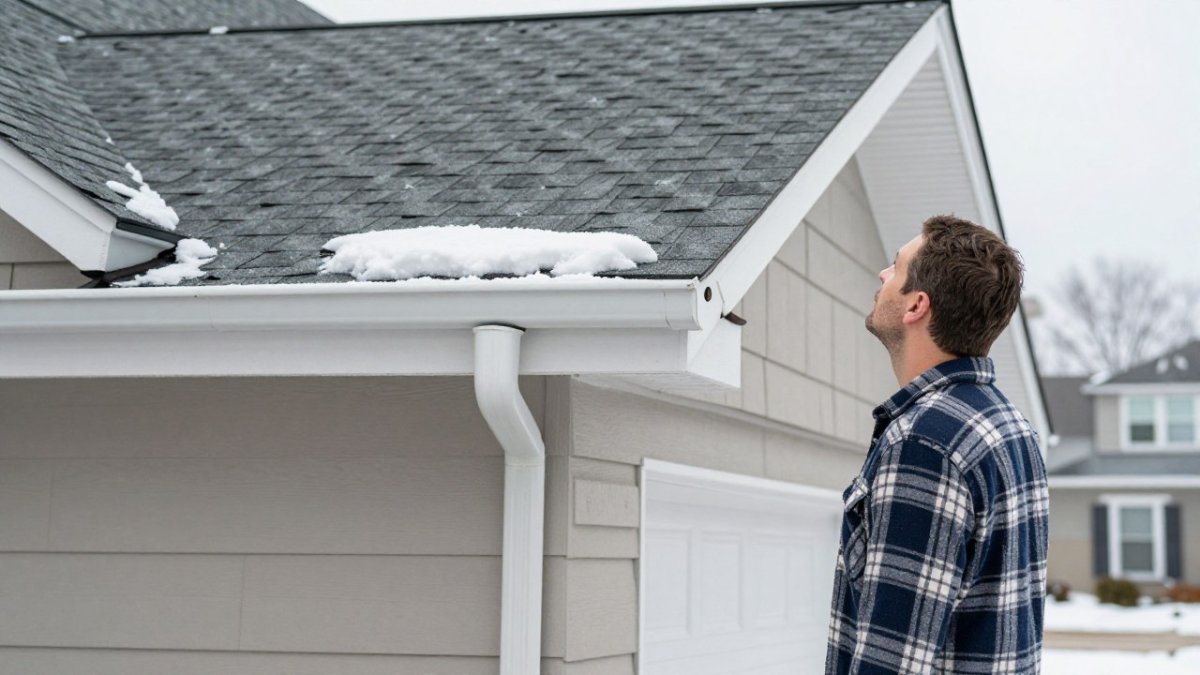
Winter ice can turn a clogged gutter into a costly problem fast. When meltwater backs up and freezes along the eave, it forms ice dams that push water under shingles and into the attic. Choosing the right gutter style for your roof is one of the simplest ways to keep that water moving where it belongs. This guide explains which gutter style fits your roof and shares 10 tips to help you pick the best system for your home.
Why Gutter Style Matters for Your Roof and Home
Gutter style is the profile, or shape, of the channel that catches rainfall and snowmelt along your roofline. Style affects how much water a gutter can carry, how well it sheds debris, and how it looks against your siding. In regions with heavy spring storms and freeze-thaw cycles, the wrong profile can leave you with overflow, sagging runs, and water pooling against the foundation.
Consider the winter hazards that gutters are meant to control:
- Icicles hanging from the eave, which can break off and injure someone walking below
- Ice dams that form when snowmelt refreezes at the edge of the roof
- Ice sheets on walkways and driveways where overflowing water freezes overnight
- Frozen downspouts that burst when water inside them expands
A gutter that drains well during the warm months also reduces the risk of these problems in winter. For more on how seamless construction affects those results, read 7 Benefits of Seamless Gutter Systems That Protect Your Home.
The Main Gutter Styles: K-Style, Half-Round, Box, and Fascia
Most residential gutters fall into four common styles. Each one suits different rooflines, so start by identifying what your home already has.
K-Style Gutters: The Most Common Profile
K-style gutters have a flat back and a decorative front that resembles crown molding. They are the most common style on American homes because they hold a large volume of water and blend well with most architectural styles. For many Midwestern and Southern homes, K-style is a common choice when the goal is reliable drainage without a custom look.
Half-Round and Box Gutters
Half-round gutters are shaped like a semicircle and suit homes with a traditional or historic look. Box gutters are rectangular and fit flush against the fascia, which works well on homes with a modern or boxy roofline. Box gutters often hold more water for their visible size, but they need careful installation to prevent leaks at the corners.
Matching Gutter Style to Your Roof Structure and Pitch
Roof pitch, shape, and total drainage area are the three numbers that should drive your gutter choice. A steep roof dumps water into the gutter faster than a low-slope roof of the same size, and a large roof collects more rain overall. Before you compare profiles, measure the roof area that drains into each gutter run and note the pitch. Then use the matrix below to narrow your options.
| Roof situation | Recommended profile | Suggested size | Downspout notes |
|---|---|---|---|
| Low-slope roof (under 4/12 pitch), moderate area | K-style | 5-inch | One downspout per 30-35 feet of run |
| Steep roof (8/12 pitch or steeper) | K-style or box | 6-inch | Add a downspout at each valley and near the bottom of steep runs |
| Large roof (over 2,000 sq ft drainage area) | K-style or box | 6-inch | Two downspouts per long run; consider 3×4-inch downspouts |
| Historic or traditional architecture | Half-round | 5-inch or 6-inch | Half-round often needs hangers spaced closer together |
| Modern or boxy roofline | Box | 5-inch or 6-inch | Box gutters need careful corner sealing |
| Metal roof | K-style or half-round | Match to roof area | Confirm fastening method for thermal movement |
A common pattern is that a steep roof feeding a single 5-inch gutter run will overflow in a heavy spring storm even if the gutter is clean. Upsizing to 6-inch or adding a downspout often solves the problem without changing the profile.
Also look at the fascia board. Some styles mount directly to a flat fascia, while others need a specific bracket. A mismatch here can lead to sagging or pulling away from the house over time.
In winter, the matrix matters even more. A steep roof with a single downspout can send meltwater down faster than the downspout can carry it, and that water refreezes on the walkway below. Adding a second downspout or upsizing the gutter keeps meltwater moving and reduces ice sheets on walkways and driveways.
Gutter Types and Sizes: 5-Inch Versus 6-Inch and Seamless Versus Sectional
Gutter size is measured by the width of the channel. Five-inch gutters are the standard choice for most homes, while six-inch gutters carry substantially more water and suit large roofs or areas with heavy rainfall. Upsizing can be worth considering on a home with a long, steep roof that drains into a single run.
Construction matters too. Seamless gutters are formed on-site from a continuous coil, with very few joints, so they resist leaks at the seams. Sectional gutters are assembled from pre-cut pieces joined with sealant and fasteners. Sectional systems can work well, but their joints are the most common source of leaks, especially after years of freeze-thaw movement.
If you want help comparing these options for your house, read How to Choose Between Seamless and Sectional Gutters. For expected service life, see How Long Do Seamless Gutters Last? 7 Lifespan Facts.
Types of Gutter Material and What Works on Metal Roofs
Material choice affects durability, weight, maintenance burden, and how well the system handles temperature swings. The right material depends on your climate, roof type, and how long you plan to stay in the home.
| Material | Expected lifespan | Maintenance burden | Best for | Watch out for |
|---|---|---|---|---|
| Aluminum | 20-30 years | Low; repaint occasionally | Most homes, moderate budgets | Dents from ladders or falling branches |
| Steel | 30-40 years | Moderate; keep coating intact | Heavy snow loads, large roofs | Rust at scratches if coating fails |
| Copper | 50+ years | Low; develops patina | Historic homes, long-term ownership | High upfront cost; patina runoff can stain |
| Vinyl | 10-20 years | Low; can crack in cold | Tight budgets, mild climates | Brittle in freeze-thaw cycles |
Aluminum is lightweight, rust-resistant, and available in many colors, which makes it a practical choice for most homes. Steel is considerably stronger and can handle heavy snow loads and large volumes of water, though it needs a protective coating.
For metal roofs, pair the gutter material with the roof panel material to limit galvanic corrosion where dissimilar metals touch. Confirm the fastening method with your installer, since metal roofs expand and contract noticeably with temperature changes.
In winter, material matters for ice hazards. Steel and copper handle ice loads better than vinyl, which can crack when meltwater refreezes inside the channel.
Types of Gutter Guards and Whether They Stop Pine Needle Clogs
Homes surrounded by pine trees face a specific challenge: needles and small debris settle into the gutter and block water flow. Compare the best gutter guards for needles to see which micro-mesh and perforated options hold up best. Gutter guards reduce that buildup, but they vary widely in effectiveness. Micro-mesh and fine screen guards tend to keep out needles better than basic leaf covers, while reverse-curve guards let water run over the edge and shed debris. No guard eliminates maintenance completely, so plan for periodic inspection, especially after autumn needle drop.
Guards also matter in winter. A poorly chosen guard can trap snow and ice on top of the gutter, so ask your installer how the guard performs in freezing conditions.
10 Tips to Pick the Best Gutter System for Your Home
- Measure your roof area and pitch before comparing capacity ratings.
- Choose seamless construction if your home gets heavy snow or ice.
- Upsize to 6-inch gutters for large or steep roof sections that drain into a single run.
- Match the profile to your architecture, using K-style for most homes and half-round for traditional looks.
- Pick a material for your climate and budget, with steel for heavy loads and aluminum for everyday use.
- Check the fascia condition before installation, since rotted wood cannot hold new brackets.
- Plan downspout placement so water exits away from the foundation and does not freeze on walkways.
- Consider guards if pine needles or leaves are a constant problem, and confirm how they handle snow.
- Ask about the workmanship warranty and what it covers.
- Get an on-site inspection rather than relying on a phone estimate.
Pricing depends on the length of your gutter runs, the material you choose, and the complexity of the installation, so ask for a written quote that breaks these out.
Schedule Your Free Gutter Inspection Before Winter
Winter is the hardest season on a gutter system, and problems that start small in November can become ice dams by January. Metal Rivers Gutter Company offers free on-site inspections for homeowners across Fort Collins and Northern Colorado, where we measure your roof, check your fascia and existing gutters, and recommend the style and size that fit your home. Our seamless gutters are custom-cut on-site for a precise, leak-free fit, and we back our workmanship with a 5-year warranty. Schedule your inspection before the first hard freeze and let us help you protect your home from the start.
Frequently Asked Questions
What is the best style of gutter?
K-style gutters are the most common choice on American homes because they resemble crown molding and handle everyday rainfall well. Half-round gutters suit traditional or historic homes, while box gutters work well on roofs with a low pitch or where a flat look is wanted. The best style depends on your roofline, the architecture of your home, and how much water your roof sheds in a storm. A local installer can confirm which profile fits your roof before you buy.
What are the three types of gutters?
Gutters are often grouped by style, construction, and material. Common styles include K-style, half-round, box, and fascia gutters. Construction is either seamless, which is one continuous run cut to length on site, or sectional, which is joined from pieces with seams that can leak over time. Materials include aluminum, steel, copper, and vinyl. Knowing each category helps you compare quotes on equal terms.
What’s better, 5-inch or 6-inch gutters?
Six-inch gutters carry more water than 5-inch gutters, so they are the better choice for large roofs, steep roof pitches, and areas that get heavy downpours or snowmelt. Five-inch gutters are common on smaller homes with modest roof areas. Because a gutter’s capacity depends on roof square footage, pitch, and local rainfall, ask your installer to size the system for your specific roof rather than picking a width by default.
Which gutter style works best with a metal roof?
Metal roofs shed water quickly and often in larger volumes, so a gutter with strong capacity and a sturdy profile is a good match. Seamless steel and aluminum gutters are popular choices, and K-style profiles are a common pairing. Make sure the gutter attachment and fasteners are compatible with your roof panels, since metal roofs can expand and contract with temperature changes.
Do gutter guards work with every gutter style?
Most gutter guards can be fitted to K-style, half-round, and fascia gutters, but the fit depends on the profile and the guard design. Mesh, foam, and reverse-curve guards each handle pine needles, leaves, and shingle grit differently. Confirm with your installer that the guard is sized for your gutter width and that it will not trap debris on top of the guard, which is a common frustration in pine-heavy yards.
Can gutters help reduce winter ice hazards?
Properly sized and pitched gutters carry snowmelt away from the eaves, which helps limit the icicles and slick patches that form on walkways, steps, and driveways in cold weather. Clogged gutters can back up water that refreezes at the edge of the roof and can lead to ice dams. Keeping gutters clear and draining through well-placed downspouts reduces these winter hazards, especially in Midwestern and southern winters with freeze-thaw cycles.
