

Last Updated: November 5, 2026
Quick Summary
Choose seamless gutters if you want fewer leaks, less patching, and a cleaner roofline over the long term. Pick sectional gutters if you want the lowest upfront bill and plan to install them yourself. Seamless runs have joints only at corners and downspout outlets, while sectional systems have a seam every few feet.
- Seamless gutters are formed on-site from one continuous piece of metal cut to your roofline.
- Sectional gutters cost less and are DIY-friendly for sheds, garages, or tight budgets.
- Every sectional seam is a future leak as sealant dries and rivets work loose.
- Seamless systems handle freeze-thaw better because ice has fewer joints to pry apart.
- Sectional gutters need seam checks, resealing, and re-tightening on top of seasonal cleaning.
Table of Contents
- Seamless vs Sectional Gutters: The Short Answer
- Seamless Gutter Pros and Cons
- Sectional Gutter Pros and Cons
- The 10 Pros and Cons of Seamless vs Sectional Gutters
- Seamless Gutter Installation: What the Job Actually Involves
- Cost Comparison: Like-for-Like Breakdown
- Gutter Maintenance: What Each Type Really Demands
- Winter Ice Hazards Gutters Help Eliminate
- Frequently Asked Questions
Seamless vs Sectional Gutters: The Short Answer
If you want the lowest upfront bill and you are handy with a ladder, sectional gutters make sense. If you want fewer leaks, less patching, and a cleaner roofline, seamless gutters are the better long-term pick. At Metal Rivers Gutter Company, we cut seamless gutters on-site for homes across Fort Collins and Northern Colorado. Whichever style you choose, long-term gutter maintenance helps keep water moving away from your roof and foundation.
Seamless gutters are formed from a single continuous piece of metal, cut to the exact length of your roofline with no joints between corners. Sectional gutters come in pre-cut lengths that snap or screw together at seams every several feet.
That one difference drives everything else: cost, leak risk, looks, and how much time you spend on a ladder.
How the Two Types Differ
Seamless gutters are rolled out on a machine at your house and cut to fit your roof exactly. The only seams sit at corners and downspout outlets. Sectional gutters arrive in boxes, and you join each length with sealant and rivets or hangers.
That means sectional systems have a joint every few feet along the whole run. Every joint is a spot where water can find a way out. Seamless runs have far fewer of those spots, which is why they hold up better through heavy rainfall and freeze-thaw cycles.
Seamless Gutter Pros and Cons
Seamless gutters are the stronger choice for leak prevention and appearance, but they cost more and you cannot install them yourself.
Where Seamless Wins
Fewer joints means fewer leak points. That matters in a place where water freezes in the seams, pries them open, and then melts straight down your siding. Custom fit also means the gutter follows your roofline instead of being pieced together, so the finished look is cleaner and helps curb appeal.
Seamless aluminum also holds up well against rust and weather, and manufacturer paint warranties on the products we install run from 20 years up to lifetime.
Where Seamless Falls Short
The upfront price is higher, and installation requires specialized equipment and trained labor. You are not doing this one yourself on a Saturday.
Repairs are also different. A damaged run usually means replacing a section rather than snapping in a new piece from the hardware store.
Sectional Gutter Pros and Cons
Sectional gutters win on price and do-it-yourself ease, but the seams demand regular attention.
Where Sectional Wins
Sectional gutters are less expensive and easier to install yourself, which makes them attractive for a shed, a garage, or a tight budget.
If one length gets crushed by a falling branch, you swap that piece and move on. No custom fabrication, no waiting on a crew.
Where Sectional Falls Short
Every seam is a future leak. Sealant dries out, rivets work loose, and water finds the gap. Seams are also where ice does the most damage: water sits in the joint, freezes, expands, and slowly opens it up.
Sectional gutters also tend to sag between hangers over time, which throws off drainage and lets water pool instead of running to the downspout.
The 10 Pros and Cons of Seamless vs Sectional Gutters
Here is the balanced list, five pros and five cons across both types, so you can weigh them side by side.
| # | Type | Pro or Con | What It Means for You |
|---|---|---|---|
| 1 | Seamless | Pro | Far fewer seams, so far fewer leak points |
| 2 | Seamless | Pro | Custom fit follows the roofline and looks cleaner |
| 3 | Seamless | Pro | Better performance in heavy rain and freeze-thaw |
| 4 | Seamless | Pro | Longer lifespan and stronger warranties |
| 5 | Seamless | Con | Higher upfront cost and professional labor required |
| 6 | Sectional | Pro | Lower initial price and DIY-friendly |
| 7 | Sectional | Pro | Easy to replace a single damaged section |
| 8 | Sectional | Con | Seams leak as sealant ages and rivets loosen |
| 9 | Sectional | Con | More maintenance and more frequent patching |
| 10 | Sectional | Con | Shorter lifespan and sagging between hangers |
The pattern is hard to miss: sectional saves money now, seamless saves work later. Which one wins depends on how long you plan to stay and how much ladder time you want.
Seamless Gutter Installation: What the Job Actually Involves
Seamless installation starts with a free on-site inspection and precise measurements of every run. A coil of aluminum, copper, or galvanized steel feeds through a forming machine parked in your driveway, and the gutter is cut to length right there. No shipping pre-cut pieces that almost fit.
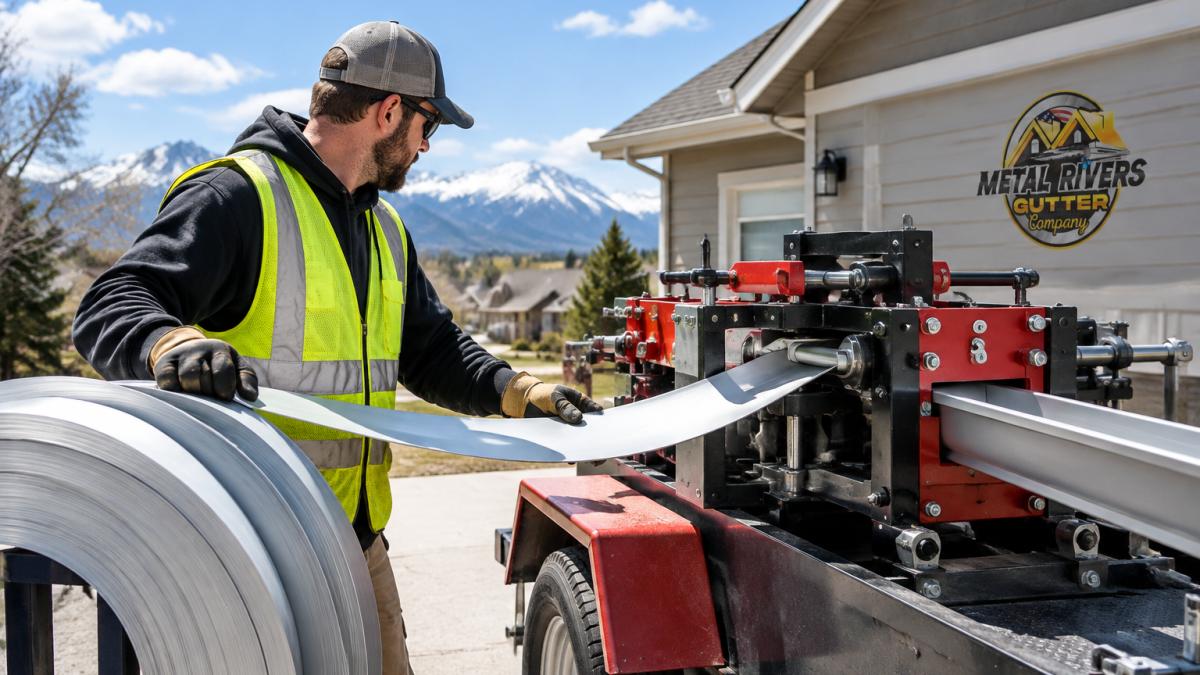
Hangers get spaced for your snow load, corners are sealed, and downspouts are routed away from the foundation. The whole point is a fit that matches your roof instead of a generic length forced to work. If you want to see what that looks like for your home, you can get custom seamless gutter installation in Fort Collins with on-site fabrication and a free inspection.
Cost Comparison: Like-for-Like Breakdown
Pricing depends on quantity, dates, and delivery, so we quote every job after a free on-site inspection. For current prices and a quote for your home, visit the Metal Rivers website.
Home size and roofline complexity. Add valleys, dormers, or multiple stories, and seamless fabrication and labor grow more involved because every angle and outlet is custom-cut on-site. Sectional systems handle simple rectangles more economically because you can buy standard lengths and cut them yourself.
Installation and labor. Seamless installation requires a crew and a forming machine. Sectional installation labor is lower per foot because the pieces are pre-made, but if you hire out, the difference shrinks. DIY sectional saves the labor entirely, but factor in your time, sealant, and hangers.
Removal and disposal. Replacing old gutters adds removal and disposal costs for either type. Seamless crews often include this in the quote; sectional DIYers need to budget for a dump run.
Repair costs over time. This is where the upfront gap can flip. A sectional seam repair takes materials and a few hours of your time each season. A seamless section replacement, when damaged, often requires a custom-formed piece and a pro visit. Over many years, sectional patch jobs can add up in materials and ladder time, narrowing the initial savings.
Lifecycle view. Seamless systems generally need less seam attention over time, which can spread the higher upfront cost over more years of service.
For a fuller breakdown, see our guide to seamless vs sectional gutter cost.
Gutter Maintenance: What Each Type Really Demands
Seamless gutters need seasonal cleaning and a yearly look at the corners and downspout outlets. Sectional gutters need all of that plus seam checks, resealing, and re-tightening rivets. That is the real maintenance difference, and it adds up over the years.
Pine needles are the usual culprit around here. They pack into the gutter, hold moisture, and speed up corrosion at every joint. A gutter guard cuts that chore down, and we install an upgraded 540 micron gutter guard that keeps debris out while letting water through.
For a season-by-season routine, our Northern Colorado gutter maintenance tips cover what to check and when.
Winter Ice Hazards Gutters Help Eliminate
A working gutter system moves meltwater off the roof and away from the house. When it does not, that water refreezes at the roof edge and starts building an ice dam. Water backs up under the shingles, works into the attic, and shows up as a stain on your ceiling weeks later. Around here, we see this dance every January, and it is a mess to clean up.
Here is what a healthy gutter system helps you avoid:
- Ice dams at the roof edge, where meltwater refreezes and backs up under shingles. The dam grows because the roof deck is warm above and cold at the eaves, and a clogged gutter makes it worse by holding water that refreezes.
- Icicles hanging over walkways and driveways, which are a genuine hazard when they let go. A full gutter feeds them, and a seamless run with fewer joints keeps water moving to the downspout instead of dripping over the edge.
- Frozen downspouts that trap water and split at the seams. Sectional downspouts have more joints to fail, while seamless downspouts are less likely to separate under ice pressure.
- Ice-filled gutters that pull loose from the fascia under the weight. A sectional system with sagging hangers is more prone to this because water pools in the low spots and freezes solid.
- Meltwater pooling at the foundation, then refreezing and heaving the slab. A properly pitched seamless gutter sends water away from the house, while a sectional run with misaligned joints can dump water right at the foundation.
Watch out: a clogged gutter makes every one of these worse, not better. Standing water in a full gutter freezes solid, and the expansion can tear the hanger right out of the fascia. Clear the gutters before the first hard freeze, and if ice dams have been a recurring problem, it is worth reducing ice dam risks around your gutters before winter sets in.
Seamless systems handle freeze-thaw better because there are fewer joints for ice to pry apart. That is the quiet advantage nobody mentions until the first thaw. Sectional systems can perform fine if you stay on top of seam maintenance, but the seams are where ice does its dirty work, and that is the trade-off you are making.
Frequently Asked Questions
Are seamless gutters better than sectional gutters?
For most homeowners in Northern Colorado, yes. Seamless gutters are cut on-site to the exact length of your roofline, so the only seams are at corners and downspout outlets. Fewer joints mean fewer leak points, and that matters in heavy rain and freeze-thaw winters. Sectional gutters cost less upfront and are easier to install yourself, but they have seams every few feet that need sealant and rivets. The trade-off is upfront price versus long-term leak risk and maintenance.
Do seamless gutters leak less than sectional gutters?
They do, because there are far fewer places for water to escape. Sectional gutters join every 10 feet or so, and each joint depends on sealant that dries out and cracks over time. Seamless gutters eliminate those mid-run joints entirely. That does not make them leak-proof: corner seams and downspout connections can still fail, which is why proper installation and periodic gutter maintenance matter. A free on-site inspection can catch failing seals before they turn into water damage.
How long do seamless and sectional gutters last?
Seamless gutters can last many years with regular cleaning, and lifespan depends on the material you choose. Sectional gutters typically need more repair attention because their joints wear out first. Lifespan depends heavily on material, how well the system drains, and whether debris is kept out. Adding a gutter guard reduces clogs and keeps water moving, which helps both types last closer to their potential.
Can gutters help reduce winter ice hazards around a home?
Yes. Gutters and downspouts move meltwater off the roof and away from the foundation, so it does not refreeze into slick patches on walkways or pool against the foundation and freeze. Clogged gutters do the opposite: water backs up, freezes at the roofline, and can contribute to ice dams and heavy icicles. Keeping the system clear, or adding a gutter guard, helps it handle snowmelt and freeze-thaw cycles without turning your driveway into a skating rink.
