

Last Updated: October 25, 2026
Quick Summary
The benefits of seamless gutter systems come down to fewer joints, which means fewer leak points, cleaner water flow, and less long-term maintenance than sectional gutters. Each run is custom cut on site to fit your roofline, so water moves in one clean channel from the roof to the downspout. You trade a higher upfront investment for better looks and less fuss.
- Sectional gutters have a seam every several feet, while seamless runs have joints only at corners and downspout outlets.
- Plan on inspecting your gutters twice a year and cleaning at least once, ideally before the first hard freeze.
- A clogged gutter is the number one cause of ice dams on otherwise healthy roofs.
- Frozen downspouts packed with leaves back up the whole run and send water down your siding at thaw.
- Metal Rivers cuts aluminum, copper, and galvanized steel on site and backs workmanship with a 5-year warranty.
Table of Contents
- Why Seamless Gutters Beat the Sectional Kind
- Seamless vs Sectional Gutters: What’s the Real Difference
- Seamless Gutters Pros and Cons Homeowners Should Weigh
- Fewer Leaks and Better Water Flow
- How Long Do Seamless Gutters Last
- Seamless Gutter Maintenance That Actually Works
- Get a Free Gutter Inspection Before You Decide
- Frequently Asked Questions
Why Seamless Gutters Beat the Sectional Kind
Seamless gutters are rain gutters formed from a single continuous piece of metal cut to the exact length of your roofline, which means far fewer joints where water can escape.
Here’s the part most folks learn the hard way. Sectional gutters come in fixed lengths that snap or screw together every few feet. Every one of those connections is a spot where seals dry out, debris catches, and water finds a way out.
This guide walks through the real benefits, the honest trade-offs, how long seamless gutters last, and what maintenance actually looks like. We’ll also cover the winter problems that gutters help you avoid, because up here that’s where the money gets lost.
Seamless vs Sectional Gutters: What’s the Real Difference
The difference comes down to how the gutter is built. Sectional gutters arrive pre-cut in lengths and get joined together on your house. Seamless gutters are fabricated in a continuous run on a machine at your property, then lifted into place as one piece.
That changes the math on installation. A comparison from New Tech Machinery’s gutter fabrication guide notes that seamless systems can require a greater upfront investment than sectional ones. Fair point, and we won’t pretend otherwise. What you’re paying for is the fit and the reduced joint count, not a fancier label.
A few practical differences matter most:
- Joints: Sectional gutters have a seam every several feet. Seamless runs have almost none.
- Fit: Custom fabrication follows your roofline, so you avoid the gaps and overlaps that come with piecing sections together.
- Appearance: No visible connectors or mismatched seams along the fascia.
- Repair: A damaged sectional piece can be swapped out easily. A seamless run usually needs a patch or a partial replacement.
If you’re weighing the two on paper, our breakdown of seamless vs sectional gutter cost covers lifespan, performance, and what actually moves the price.
Seamless Gutters Pros and Cons Homeowners Should Weigh
Seamless gutters pros and cons come down to this: you trade a higher upfront investment for fewer leak points, better appearance, and less long-term fuss. The trade-off is real, and it’s worth naming plainly.
The pros:
- Fewer joints mean fewer places for water to escape
- Custom-fit gutters follow your roofline and look cleaner
- Less debris catches along the run, so clogs happen less often
- Better drainage when the system is sized and sloped correctly
- Strong curb appeal on the home exterior
The cons:
- Higher initial investment than sectional gutters
- Repairs on a long continuous run can be more involved
- Installation quality matters more, since a bad slope on one long piece affects the whole run
- You need a fabricator on site, so scheduling takes planning
What most guides miss is that the installation crew matters more than the product. A seamless gutter hung with the wrong slope will pool water just like a cheap sectional one. That’s why we walk the roofline before anything gets cut.
Fewer Leaks and Better Water Flow
Fewer joints is the whole ballgame. Every seam on a traditional gutter is a maintenance item waiting to happen, and when a seal lets go, water runs down the fascia and pools at the foundation instead of heading to the downspouts.
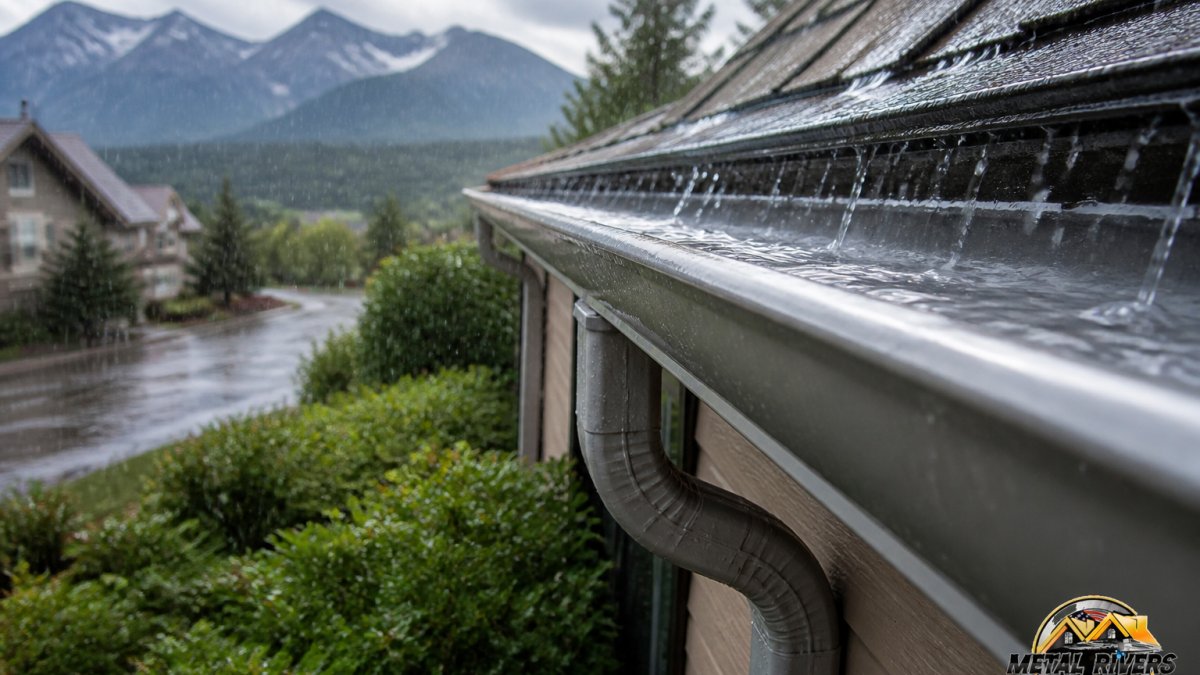
Seamless gutters move roof runoff in one clean channel from the high point to the outlet. That matters for foundation protection and soil erosion control, because water that leaves the roof in the right place stops carving channels through your landscaping.
Leaks still happen, of course. Loose fasteners, sagging runs, and ice dams are the usual suspects. We put together a guide on why seamless gutters leak that covers the seven common causes and how to fix each one.
How Long Do Seamless Gutters Last
Seamless gutters typically last decades with basic maintenance, and material choice drives most of that range. Here’s the honest breakdown by material, because ‘decades’ doesn’t tell you much when you’re writing the check.
- Aluminum: The most common pick for residential applications. Light, resists corrosion, holds paint well. Expect a long service life with normal maintenance, though it can dent under heavy ladders or falling limbs.
- Galvanized steel: Heavier and stronger than aluminum, with good impact resistance. It holds up well but can rust at cut edges and scratches over time, so touch-up matters.
- Copper: The premium option. It develops a patina, resists corrosion, and outlasts the other two by a wide margin. It’s also the heaviest and the most expensive, and it takes a skilled hand to install without oil-canning.
The honest caveat: lifespan depends on your trees, your roof pitch, and whether anyone ever cleans the thing. A gutter packed with pine needles and frozen solid every February won’t hit its rated years no matter what it’s made of. Ice dams are the quiet killer, because repeated freeze-thaw cycles stress the fasteners and seams even on a seamless run.
Repairability: The Trade-Off Nobody Mentions
Seamless systems still have joints at the corners and downspout outlets, and those are the spots that fail first. A damaged sectional piece can be swapped out easily. A seamless run usually needs a patch or a partial replacement, and a long custom section means a fabricator has to come back out. That’s the real cost of the seamless advantage, and it’s worth knowing before you buy.
When an older system starts failing, the real question is repair versus replacement. Our gutter repair vs replacement guide walks through the signs of failure and when a full replacement makes more sense than patching. If you’ve had gutters leak within a couple years of installation, the problem was likely the joints or the slope, not the material.
Here’s how the three materials we fabricate compare on the points that matter most.
| Material | Key traits | Watch out for |
|---|---|---|
| Aluminum | Light, resists corrosion, holds paint well | Can dent under ladders or falling limbs |
| Galvanized steel | Heavier and stronger, good impact resistance | Can rust at cut edges and scratches |
| Copper | Develops a patina, resists corrosion, outlasts the others | Heaviest, most expensive, needs skilled install |
Seamless Gutter Maintenance That Actually Works
Maintenance is where seamless gutter systems earn their keep, but they aren’t self-cleaning. Plan on inspecting twice a year and cleaning at least once, ideally in late fall before the first hard freeze. Around here, that means getting it done before the first week of December, because once the ground freezes and the ladder starts sliding, you’ve lost your window.
Here’s the routine we recommend:
- Check the downspouts first. If water backs up there, the run is clogged somewhere upstream.
- Clear debris from the roof side, not from a ladder balanced on the gutter.
- Flush the run with a hose and watch for pooling, which signals a slope problem.
- Look for loose hangers and sagging sections after heavy storms.
- Confirm water exits well away from the foundation.
Gutter guards cut the frequency of all this, especially in tree-dense yards. They don’t stop every needle, but they keep the bulk of the debris out.
Winter Ice Hazards Your Gutters Help Prevent
This is the part folks around here learn the hard way. When a gutter clogs and water backs up, it freezes into an ice dam at the roof edge. That dam traps meltwater, and the water works its way under shingles, down the fascia, and into the wall cavity. You don’t see it until the drywall stains show up in February.
A few specific winter headaches a clean, well-sloped seamless system helps you avoid:
- Ice dams at the roof edge. A clogged gutter is the number one cause of ice dams on otherwise healthy roofs. Water backs up, freezes, and repeats every freeze-thaw cycle.
- Icicles the size of fence posts. Those pretty icicles hanging off the gutter are a warning sign, not decoration. They mean water is spilling over a full gutter and freezing on the way down. They’re also a hazard when they let go.
- Frozen downspouts. A downspout packed with leaves freezes solid, and then the whole run backs up. You won’t know until the thaw, when water starts running down the siding instead of out the outlet.
- Fascia rot and soffit damage. Repeated freeze-thaw cycles against a backed-up gutter rot the wood behind it. That’s a carpentry bill, not a gutter bill.
- Foundation ice and walkway hazards. Water that should be exiting three to four feet from the foundation instead pools at the base, freezes, and turns your sidewalk into a skating rink.
A seamless run doesn’t stop winter, but it gives water one clean path to the downspout instead of a dozen joints where it can escape and freeze. Our step-by-step guide on cleaning gutters before winter covers the full process, and if you’re tired of the ladder, the upgraded 540 micron gutter guard we install keeps the bulk of the debris out so the freeze-up risk drops.
Get a Free Gutter Inspection Before You Decide
You don’t have to guess whether your current gutters are doing their job. Metal Rivers Gutter Company offers free on-site inspections, and we’ll tell you straight whether a repair makes sense or whether replacement is the smarter money.
Our seamless gutters are custom cut on site in aluminum, copper, or galvanized steel, backed by a 5-year workmanship warranty and manufacturer paint warranties ranging from 20 years up to lifetime. We’re locally owned, with 300+ happy customers, 312 projects done, and a 4.8-star rating on Google across 51 reviews. We also install an upgraded 540 micron gutter guard for homeowners tired of the ladder.
If you’ve had gutters leak within a couple years of installation, the problem was likely the joints or the slope, not the material. That’s exactly what a continuous run fixes.
Frequently Asked Questions
Do seamless gutters leak?
Far less than sectional systems. Seamless gutters are formed from one continuous piece of metal cut on-site, so the only joints are at the corners and downspout connections. Sectional gutters have a seam every few feet, and each seam is a spot where caulk fails and water escapes over time. No gutter is completely leak-proof if it is clogged or pitched wrong, which is why proper slope and regular cleaning still matter.
Are seamless gutters cheaper than regular gutters?
No. Seamless gutters usually cost more upfront because they are custom-fabricated on-site for your roofline and installed by a crew with specialized equipment. The trade-off is fewer leak-prone joints, less patching, and a longer service life. Many homeowners find the long-term value offsets the higher initial investment, but pricing depends on your home’s size, roofline, and material, so ask for a written quote.
Can seamless gutters help prevent winter ice hazards?
They help, but they are not a cure-all. A seamless system with the right slope and clear downspouts moves meltwater off the roof and away from the foundation before it refreezes. That reduces the ice that builds up at the roof edge and the sheets of ice that form on walkways and driveways below. Ice dams still form when attic heat melts snow and it refreezes at the eaves, so attic insulation and ventilation matter too.
Are seamless gutters easier to maintain?
Yes, in most cases. With no seams to catch debris and no joints to reseal, routine work comes down to clearing the trough and checking downspouts. Homes surrounded by pine trees still need regular cleaning, and a gutter guard can cut the frequency. Plan on inspecting in spring and fall, and after any big storm, to catch sagging or clogs early.
If your gutters are overflowing, sagging, or icing up every winter, don’t wait for the next thaw to find out what it cost you. Get started with Metal Rivers Gutter Company and reach out for a free inspection so we can check your system and give you a clear recommendation.
