
Last Updated: November 15, 2026
Quick Summary
Seamless gutter installation means we form one continuous run of gutter on site, measured to your roofline, then fasten it so water moves away from the house without interruption. We cut aluminum, copper, and galvanized steel on the truck and hang it in one piece, which removes the joints where most leaks start.
- Sectional gutters snap or rivet together, and every connection is a future leak point in freeze-thaw cycles.
- We size gutters by measuring roof footprint, pitch, and how water sheds off valleys and dormers.
- Aluminum is the practical default, while galvanized steel resists bending under ice loads better.
- Hangers spaced too far apart show up as sagging within a season or two.
- Before the first freeze, clear leaves and needles from the channel and downspouts.
Table of Contents
- What Seamless Gutter Installation Near Me Actually Involves
- Step 1: Measure the Roofline and Size the Gutter System
- Step 2: Pick Materials and Profile for Your Roof and Trees
- Step 3: Set Slope, Hangers, and Downspout Placement
- The Benefits of Seamless Gutters for Northern Colorado Homes
- Step 4: Cut and Install the Gutter On-Site
- Seamless Gutter Cost per Foot: What Moves the Number
- How to Prevent Ice Dams With Gutters Before the First Freeze
- Frequently Asked Questions
What Seamless Gutter Installation Near Me Actually Involves
Seamless gutter installation is the process of forming a single continuous run of gutter on site, measured to your roofline, then fastening it so water moves away from the house without interruption.
Below, we walk through the seven steps we follow on a real job, plus what moves the price and how to keep ice from wrecking your drainage before the first hard freeze.
Seamless vs. Sectional: Why the Seams Matter
Sectional gutters arrive in fixed lengths and get snapped or riveted together. Every one of those connections is a future leak point, and in a climate that swings above and below freezing for months, those connections work loose.
Seamless runs eliminate that entirely. If you are still weighing the two, our guide on choosing between seamless and sectional gutters lays out the trade-offs in detail.
The one drawback? Seamless work requires a machine on site, so it is not a job you can knock out with a pickup and a ladder. That is the honest trade: fewer seams, more setup.
Step 1: Measure the Roofline and Size the Gutter System
Gutter sizing starts with the roof, not the wall. We measure the actual drainage area, which means roof footprint plus pitch plus how the water sheds off valleys and dormers.
A steep roof dumps more water faster than a shallow one over the same square footage. Long runs need larger capacity. So does a roof that collects from a second story onto a lower section.
What most guides miss is that undersized gutters do not fail gradually. They fail in the one storm that matters, and the water lands right at your foundation.
Step 2: Pick Materials and Profile for Your Roof and Trees
Material choice drives both durability and how much upkeep you sign up for. We install aluminum most often, but copper and galvanized steel earn their place on the right house. The trick is matching the metal to your roof pitch, your tree cover, and how long you plan to stay put.
Aluminum, Copper, or Galvanized Steel
- Aluminum: Light, rust-resistant, and available in a wide color range. The practical default for most homes. It will not rust through, but it can dent under a falling branch, and hail can leave dimples on the face. Maintenance is low, an annual rinse and a check after big storms. Cost sits at the lower end of the three.
- Copper: Ages to a distinctive patina and lasts a long time, decades, often outlasting the roof. It costs more upfront and is a look you either want or do not. Copper does not rust, but it can develop a green runoff that stains light-colored siding or concrete below if the downspouts are not routed carefully. Maintenance is minimal once the patina forms.
- Galvanized steel: Very strong and holds up to impact, though it is heavier and demands proper hangers. The zinc coating protects against rust, but if the coating is scratched during installation or by debris, the exposed steel can start to corrode. It costs more than aluminum but less than copper. In heavy snow country, steel’s strength is a real advantage, it resists bending under ice loads better than aluminum.
Profile matters too. A wider profile handles more volume. A deeper profile moves water faster. The common profiles are K-style (flat back, decorative front, fits most homes) and half-round (semicircular, often used on older or historic homes). Since guards can reduce the debris that reaches either profile, StormPros explains how they fit into a maintenance plan for tree-covered homes.
For a fuller comparison of how each material handles climate, cost, and longevity, our gutter materials guide breaks it down side by side.
Here is how the three metals we form on the truck compare before you pick one.
| Material | Best for | Key difference |
|---|---|---|
| Aluminum | Most homes; practical default | Light, rust-resistant, wide color range; can dent |
| Copper | Long-term owners wanting a patina look | Lasts decades, often outlasting the roof; costs more upfront |
| Galvanized steel | Heavy snow country and impact | Very strong, resists bending under ice loads; heavier |
Step 3: Set Slope, Hangers, and Downspout Placement
Water has to know where to go. We set a slight pitch toward the downspouts so the gutter drains completely instead of holding standing water that freezes overnight.
Hangers, also called brackets, hold the whole run against the fascia. Spacing them too far apart is a common mistake, and it shows up as sagging within a season or two.
Watch out: A gutter pitched the wrong way, even slightly, will pool water at one end. In winter that pool freezes, expands, and can pull the hanger loose from the fascia.
The Benefits of Seamless Gutters for Northern Colorado Homes
The benefits of seamless gutters come down to fewer leaks and better protection for the ground around your house.
One continuous run means water stays in the channel until it reaches the downspout. That protects siding, keeps soil from washing out, and reduces the constant drip that rots fascia boards over time.
Here is where our winters make the case. Think about what happens after a snowmelt refreezes:
- Water trapped in a seam splits the joint open, and the next thaw sends it down the wall.
- A sagging section holds a puddle that freezes into a solid block, backing meltwater up under the shingles.
- Overflow at a clogged downspout sheets down the siding and refreezes into a slick sheet on the walk below.
- Ice that curls over the gutter edge can snap the hanger and drop the whole run.
Seamless runs cut down on the first two. Adding a gutter guard, like our upgraded 540 micron gutter guard, keeps pine needles and shingle grit from turning the channel into a dam.
Step 4: Cut and Install the Gutter On-Site
This is the step that defines seamless work. The coil feeds into the roll-former, and we cut each run to the exact length of that stretch of roofline.
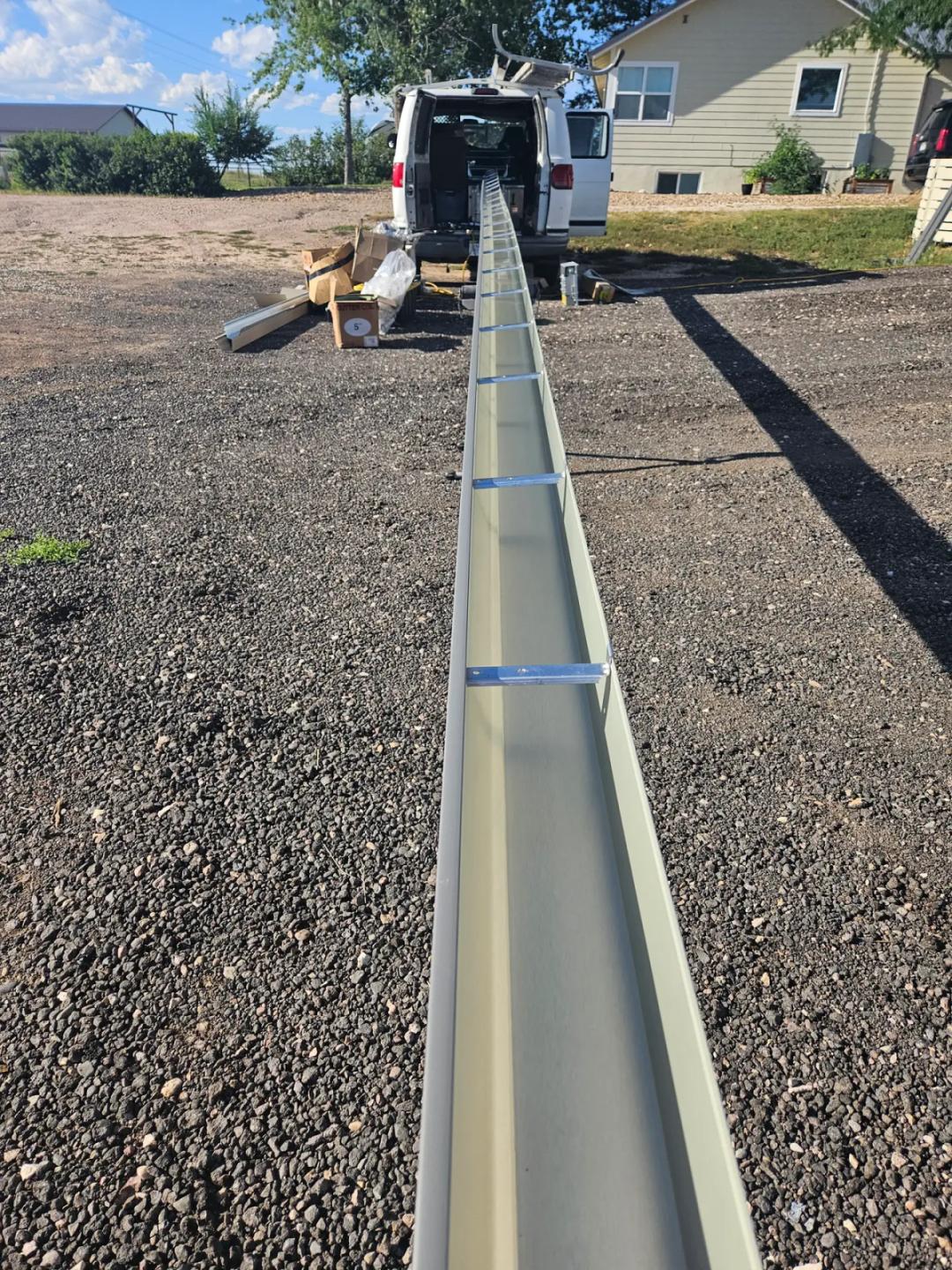
No two runs on your house are the same length, so nothing gets cut to a generic size and hauled in. We form it, cap the ends, seal the corners, and fasten it to the fascia in one continuous piece.
If you are curious how on-site fabrication produces that fit, our article on cutting custom gutters on site walks through the process.
Watch out: A crew that forms gutter before checking the actual roofline will leave you with short runs and added seams. Measure first, cut second, every time.
Seamless Gutter Cost per Foot: What Moves the Number
Seamless gutter cost per foot depends on material, profile size, the number of stories, roof complexity, and how many downspouts the job needs.
National averages give you a rough frame.
What actually moves your number, and why:
- Material: Aluminum sits at the lower end because the coil is inexpensive and easy to form. Copper and steel typically cost more in material than aluminum. The metal itself is only part of the story, copper and steel also take more time to cut and handle.
- Stories: Two-story work takes more time and more safety setup. Crews need ladders or lifts, and the pace slows because every piece has to be hoisted and aligned from height. A one-story ranch might take half a day; a two-story with a steep pitch can stretch to two days.
- Roof complexity: Valleys, dormers, and multiple rooflines mean more runs and more corners. Every inside or outside corner is a separate piece that has to be cut, sealed, and fastened. A simple gable roof might need four corners; a cross-gabled roof with a dormer can need twelve or more.
- Downspouts: More discharge points mean more material and labor. Each downspout adds a drop, elbows, and a means of directing water away from the foundation. A typical house needs two to four; a complex roofline might need six.
- Removal: Tearing off old gutters adds time. Old sectional gutters often come off fast, but if they were fastened with screws into rotted fascia, the crew may need to repair the wood before new hangers go up, and that is extra labor and material.
A common pattern is that homeowners focus on the per-foot number and miss the add-ons: corner cuts, downspout extensions, gutter guards, and fascia repair.
For a closer look at what drives pricing on homes here, our gutter installation cost guide for Fort Collins homeowners explains the local factors. We give free on-site inspections so you get a real number instead of a phone estimate.
How to Prevent Ice Dams With Gutters Before the First Freeze
Knowing how to prevent ice dams with gutters starts with one idea: keep water moving and keep the roof edge cold.
Ice dams form when snow melts up the roof, runs down to the cold eave, and refreezes. That ice backs water up under the shingles. A gutter that drains freely gives that meltwater somewhere to go.
Before the first freeze, we recommend:
- Clear leaves and needles out of the channel and the downspouts.
- Check that downspouts discharge away from the foundation, not into a frozen puddle.
- Confirm the gutter is pitched so it empties completely.
- Look for loose hangers that let water pool.
- Consider a gutter guard to cut down on debris between cleanings.
If ice dams have been a recurring headache, our guide to preventing ice dams in Fort Collins covers attic insulation and ventilation alongside the gutter side of the fix.
Ice and snow up here do not forgive a sloppy drainage system, and the freeze-thaw cycle will find every weak point you leave behind. Metal Rivers Gutter Company forms aluminum, copper, and galvanized steel on site so each run fits your roofline in one piece, backs the work with a 5-year workmanship warranty and manufacturer paint warranties ranging from 20 years up to lifetime, and starts with a free gutter inspection.
Frequently Asked Questions
What is the average price for seamless gutters installed?
Pricing depends on material choice, roof shape, the number of stories, your roofline length, how many downspouts you need, and whether old gutters have to come down first. Metal Rivers Gutter Company offers free on-site inspections and a written quote tied to your actual roof.
What are the primary benefits of seamless gutters over sectional gutters?
The benefits of seamless gutters come down to one thing: no seams, no leak points. Sectional gutters join every 10 feet or so, and each joint is a spot where water can work its way behind the fascia. A seamless run is cut to your roofline in one piece, so there is nothing to caulk and nothing to pull apart. That also means less clogging at joints, fewer sagging sections, and a cleaner look along the fascia.
How does professional seamless gutter installation prevent ice dams in winter?
Gutters do not cause ice dams, but a poorly pitched or clogged system makes them worse. When meltwater backs up behind a frozen gutter, it creeps under shingles and into the soffit. A properly sloped seamless run with clear downspouts moves that water off the roof instead of letting it pool. Pairing the gutters with a 540 micron gutter guard keeps pine needles and leaves out, which is what usually causes the backup in the first place.
How do I know if my home needs new seamless gutters?
Look for gutters pulling away from the fascia, rust streaks or peeling paint behind the gutter, water pooling at the foundation, and seams that drip after a rain. Ice hanging in long columns off the roof edge in winter is another sign the system is not draining. If your gutters are old or you have patched the same leak more than once, a free inspection can help you weigh repairs against replacement.
