
Table of Contents
- How Gutters Stop Fascia Rot Before It Starts
- Signs of Fascia Board Rot You Should Never Ignore
- Ice Dam Prevention with Gutters: Your Winter Defense
- Gutter Guard Benefits for Fascia Protection
- Step-by-Step: Preventing Fascia Rot with Gutters
- Common Mistakes That Lead to Fascia Rot
- When to Call a Professional for Gutter and Fascia Help
- Protecting Your Home from the Top Down
- Frequently Asked Questions
Last Updated: September 18, 2026
How Gutters Stop Fascia Rot Before It Starts
Preventing fascia rot with gutters comes down to one simple job: moving water away from the wood that lines your roofline. The fascia board is that strip of wood running along the edge of your roof, right behind the gutter. When water sits against it, the wood soaks it up like a sponge.
This guide from Metal Rivers Gutter Company breaks down how that damage starts and how to stop it.
The U.S. Department of Housing and Urban Development points out that water is one of the most destructive forces acting on a home. Wood that stays wet will rot. It’s not a matter of if, but when.
Fascia rot is the decay of the wooden board behind your gutter, caused by trapped moisture that never gets a chance to dry out.
Here’s what most folks get wrong. They think gutters are just about keeping water off their heads. In truth, a working gutter system is the first line of defense for your roofline, your soffit, and your foundation.
Below, we’ll show you exactly how to spot trouble early and the steps that actually keep your fascia dry.
Signs of Fascia Board Rot You Should Never Ignore
Catching rot early saves you thousands. The tricky part is that it hides in plain sight. Most homeowners walk past the problem every day without noticing.
What Rotted Fascia Looks and Feels Like
Soft, crumbly wood is the clearest sign. Press a screwdriver into the board. If it sinks in easy, you’ve got rot.
Other warning signs:
- Peeling or bubbling paint along the roofline
- Dark stains or streaks on the wood
- Sagging gutters pulling away from the house
- A musty smell near the eaves
- Visible mold or mildew
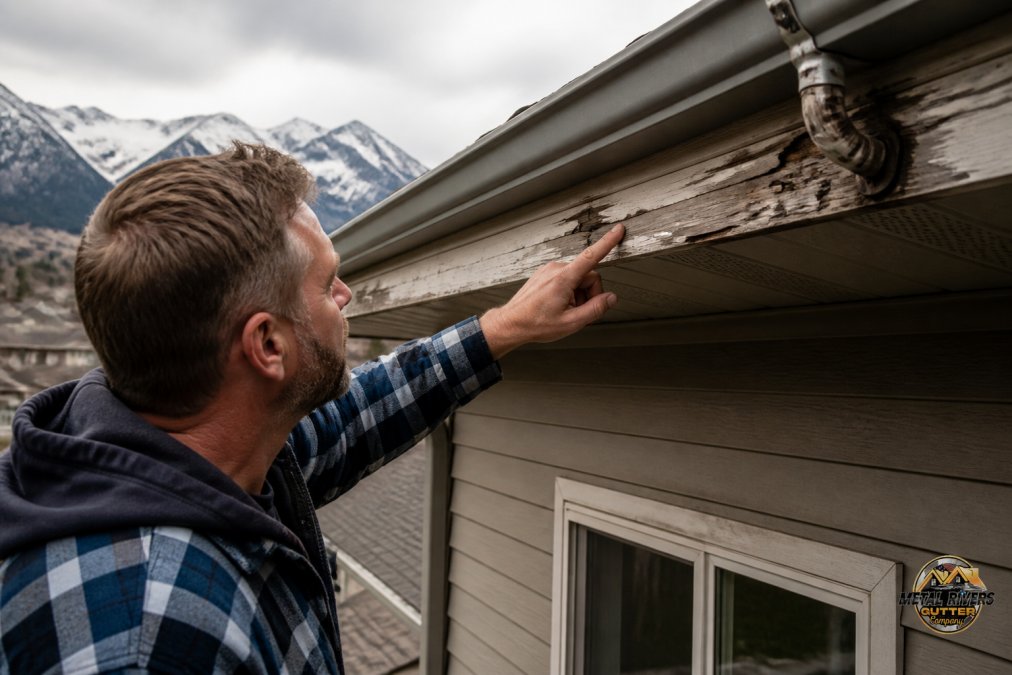
If any of this sounds familiar, don’t wait. Rot spreads fast once it starts.
Ice Dam Prevention with Gutters: Your Winter Defense
Ice dams are the number one winter threat to your fascia. An ice dam is a ridge of ice that forms at the roof’s edge and blocks melting snow from draining off. Water backs up behind it and finds its way into your home.
Picture this: it’s January, and snow sits heavy on your roof. Your attic leaks warm air, melting the snow from underneath. That meltwater runs down to the cold eaves and refreezes. A dam builds up. Water pools behind it and seeps under your shingles, straight into the fascia.
How Ice Dams Form and Why They Wreck Fascia
Water freezes, expands, and forces its way into every crack. That freeze-thaw cycle pries wood apart. The fascia soaks up the backup, and rot sets in.
Here’s what a clean, working gutter system does for you in winter:
- Carries meltwater safely away before it can refreeze at the edge
- Stops water from pooling against the fascia board
- Reduces the heavy ice weight that pulls gutters loose
- Keeps the freeze-thaw cycle from tearing at your roofline
A clogged gutter makes all of this worse. Water has nowhere to go, so it backs up and freezes right against the wood.
Gutter Guard Benefits for Fascia Protection
Gutter guards keep debris out so water can flow. That’s the short version. The longer version matters more for your fascia.
When pine needles and leaves pile up, water backs up and sits against the roofline. Guards stop that clog from forming in the first place. Metal Rivers Gutter Company installs an upgraded 540 micron gutter guard that keeps the junk out while letting water through.
The benefits stack up:
- Less standing water against the fascia
- Fewer cleanings, which means less wear on the system
- Better winter flow, so ice dams are less likely
- Longer gutter life overall
Even with guards, check the downspout outlets each fall. Guards stop debris in the trough, but a blocked outlet still backs water up to your fascia.
Step-by-Step: Preventing Fascia Rot with Gutters
You can handle most of this yourself. A few tasks need a pro. Here’s the plan.
| Step | What to Do | How Often |
|---|---|---|
| Inspect and clean | Clear debris, flush the trough | Twice a year |
| Check slope and drainage | Confirm water flows to downspouts | Each inspection |
| Install guards | Add 540 micron guards | Once, then maintain |
| Repair damage | Fix leaks and loose hangers | As needed |
| Call a pro | Handle rot and reinstallation | When rot appears |
Step 1: Inspect and Clean Your Gutters
Get up there twice a year, in spring and fall. Scoop out leaves, twigs, and grit. Flush the trough with a hose and watch where the water goes.
If water sits in spots, you’ve got a problem. If it pours over the edge, you’ve got a bigger one.
Step 2: Check for Proper Slope and Drainage
Water needs to run toward the downspouts, not pool in the middle. A slight slope keeps it moving. Downspouts should dump water well away from the foundation.
Look for:
- Standing water in the trough
- Downspouts that drain too close to the house
- Loose hangers letting the gutter sag
Step 3: Install Quality Gutter Guards
This is the step that cuts your workload for years. A good guard keeps debris out and lets water flow. Metal Rivers Gutter Company custom-cuts seamless gutters on-site, so the fit is tight and leak-free from day one.
The best guard in the world won’t help if your gutter slope is off. Fix drainage first, then add guards.
Common Mistakes That Lead to Fascia Rot
The biggest mistake is ignoring small problems until they’re big ones. A tiny leak today is a rotted board next year.
Watch out for these:
- Skipping fall cleaning, then letting winter do its damage
- Piling mulch or soil against the foundation near downspouts
- Painting over rot instead of fixing it
- Hanging heavy decorations from the gutter
- Letting downspouts dump water right at the base of the house
Painting over soft wood traps moisture inside and speeds up rot. Scrape it, treat it, and replace any board that’s gone soft.
When to Call a Professional for Gutter and Fascia Help
Call a pro when you see soft wood, sagging gutters, or water where it shouldn’t be. Rot repair isn’t a weekend project. It means replacing boards and fixing the water problem that caused it.
A pro can also spot slope issues and bad drainage that you might miss. Metal Rivers Gutter Company offers free on-site inspections, so you know exactly what you’re dealing with before you spend a dime.
They back their work with a 5-year workmanship warranty and manufacturer paint warranties ranging from 20 years up to lifetime. That’s the kind of coverage that matters when you’re protecting your home.
Federal Emergency Management Agency guidance on protecting homes from water damage
Protecting Your Home from the Top Down
Your roofline takes the first hit from every storm, every freeze, and every melt. Keeping gutters clear and flowing is the cheapest insurance you’ll ever buy for your fascia.
A common mistake is waiting for visible damage. By then, the rot has already started.
Frequently Asked Questions
What are the early signs of fascia board rot?
Early warning signs include peeling paint, soft or spongy wood when you press on it, visible water stains, and a musty smell near the roofline. You might also notice gutters pulling away from the house or screws that no longer hold tight. Catching these signs early lets you address drainage issues before the damage spreads to your roof deck or walls.
How do clogged gutters cause fascia rot?
When gutters clog with leaves, pine needles, or debris, water backs up and overflows behind the gutter. That water saturates the fascia board, which is the wood strip running along your roof edge. Over time, constant moisture breaks down the wood fibers and creates the perfect environment for rot. Keeping gutters clear and water flowing away from the house is the single best way to prevent this.
Do seamless gutters help prevent fascia rot better than sectional ones?
Yes, seamless gutters offer better protection because they have no joints where water can leak. Sectional gutters have seams every few feet, and those seams are common failure points that drip water directly onto fascia boards. Seamless gutters are custom-cut on-site to fit your roofline exactly, which means fewer leaks and less chance of water reaching the wood behind them.
How often should gutters be cleaned to prevent water damage?
Most homes need gutter cleaning at least twice a year, in spring and fall. If you have pine trees or lots of mature trees nearby, you may need three or four cleanings annually. Homes in Northern Colorado often deal with heavy spring rains and winter ice, so checking gutters after major storms is smart. Gutter guards can reduce how often you need to clean, but they do not eliminate maintenance entirely.
Water damage doesn’t wait, and neither should you. Metal Rivers Gutter Company installs custom seamless gutters cut on-site for a precise, leak-free fit, backed by a 5-year workmanship warranty and paint warranties up to lifetime. With free on-site inspections and an upgraded 540 micron gutter guard, they make it easy to protect your home from the top down. Get a quote from Metal Rivers Gutter Company and keep your roofline dry for the long haul.