Table of Contents
- Why Gutter Replacement Matters for Your Home
- 9 Signs Your Gutters Need Replacing
- 1. Visible Cracks, Holes, and Splits
- 2. Rust, Corrosion, and Metal Deterioration
- 3. Sagging, Pulling Away, or Loose Gutters
- 4. Gaps and Separated Gutter Sections
- 5. Standing Water and Poor Drainage
- 6. Frequent Clogs and Overflowing Water
- 7. Water Pooling Around Your Foundation
- 8. Peeling Paint Near Fascia and Soffit
- 9. Ice Dams and Winter Water Damage
- Common Gutter Problems: Maintenance Issue or Replacement?
- Gutter Repair vs. Replacement: How to Decide
- Average Lifespan of Gutters by Material
- Winter Ice Dams and Gutters: What You Should Know
- What Happens If You Delay Gutter Replacement
- Next Steps: Getting Your Gutters Inspected
- Frequently Asked Questions
Last Updated: October 5, 2026
Why Gutter Replacement Matters for Your Home
Your gutters work year-round, channeling rainwater and snowmelt away from your foundation, roof, and walls. When they fail, water pools around your foundation, seeps into basements, rots fascia and soffit, and sets up ice dams in winter.
At Metal Rivers Gutter Company, we’ve inspected hundreds of homes across Northern Colorado. The ones with failing gutters almost always have foundation issues, basement water stains, and landscaping damage that could’ve been prevented.
This guide walks you through the nine most common signs your gutters need replacing, plus how to decide between repair and replacement.
9 Signs Your Gutters Need Replacing
Knowing when to replace your gutters starts with spotting the warning signs. Here are the nine most reliable indicators.
1. Visible Cracks, Holes, and Splits
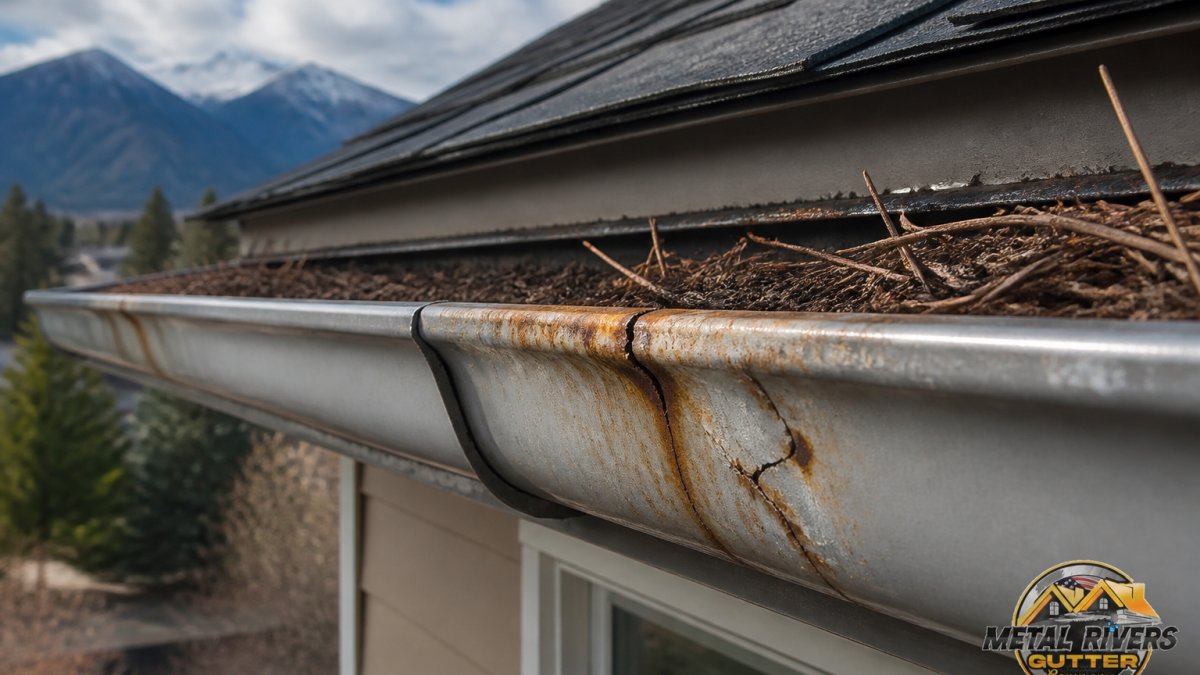
The first thing to look for is physical damage to the gutter itself. Cracks, holes, and splits mean water leaks out instead of flowing toward your downspouts.
Small cracks can sometimes be sealed, but once they spread, that’s a temporary fix at best. A dime-sized hole drains water straight onto your fascia and soffit, causing fast-spreading wood rot.
Splits in the gutter seams are especially telling.
2. Rust, Corrosion, and Metal Deterioration
Rust is a slow killer. It starts as orange or brown streaks but eats away at the metal underneath, turning it brittle and poking holes through it.
Galvanized steel gutters are prone to rust, especially where moisture lingers. Aluminum can corrode too, developing a chalky, pitted surface as its protective coating breaks down.
If you see rust stains running down your gutters or the metal looks pitted and rough, replacement is usually the answer. Painting over rust might slow it, but it won’t stop it.
3. Sagging, Pulling Away, or Loose Gutters
Gutters should hang straight and tight against your roofline. If they’re sagging, pulling away from the fascia, or visibly loose, water pools in the low spots, gets heavier, and pulls them down even more.
Sagging usually means the hangers are failing or the gutter got too heavy from standing water and debris. You can sometimes re-secure a loose gutter, but significant sagging often means the gutter is damaged or the fascia underneath is rotting.
Stand back and look at your gutters from the ground. If they dip instead of running parallel to the roofline, water won’t flow toward the downspouts the way it should.
4. Gaps and Separated Gutter Sections
Gutters are made of sections that connect at seams. Over time those seams can separate, especially if fasteners loosen or the gutter shifts from settling or wind damage.
When sections separate, water escapes at the gap instead of flowing through. You’ll often see water stains on the fascia below the seam, and debris piles up inside the joint, making clogs worse.
If you see daylight between gutter sections or water pouring out at a seam during rain, that’s a sign your gutters need replacing. Sealing it might work once, but on an old gutter the problem will likely pop up elsewhere.
5. Standing Water and Poor Drainage
After a rain, your gutters should empty within a few hours. If water sits for days, that’s a drainage problem. Standing water is heavy, attracts mosquitoes, and speeds up rust and corrosion.
Poor drainage usually means the gutter isn’t sloped right toward the downspout, or the downspout is clogged or undersized, sometimes both. Old gutters may have settled and lost their slope over the decades.
Walk around your house a few hours after it rains. Puddles still sitting in your gutters are a warning sign your gutters need replacing, especially if it happens consistently.
6. Frequent Clogs and Overflowing Water
If you’re cleaning your gutters constantly and water still overflows during rain, something is wrong.
Frequent clogs are a maintenance headache, but they also point to a bigger problem: gutters not sized right for your roof, or a slope that’s off and letting debris settle.
Overflowing water is especially damaging. It pours down your fascia and soffit, soaks your foundation, and erodes landscaping. Constant overflow usually calls for properly sized gutters and downspouts, not just more cleaning.
7. Water Pooling Around Your Foundation
This is the most serious sign. If water pools around your foundation after rain, your gutters aren’t doing their job. Water should be directed at least 4 to 6 feet away through proper downspout extensions and grading.
Foundation pooling leads to basement leaks, foundation cracks, and mold growth, and it’s expensive to fix. Once water gets in, you’re looking at sump pumps, interior drainage, or foundation repair.
If you see water pooling around your home’s perimeter after rain, inspect your gutters and downspouts right away.
8. Peeling Paint Near Fascia and Soffit
Peeling or blistering paint on your fascia (the board along the roof edge) or soffit (the underside of the overhang) usually means water is getting behind it, a sign your gutters are leaking or overflowing and sending water down the side of your home.
Once water gets behind the fascia, it causes wood rot. The paint bubbles and peels as the wood swells and contracts, which means water damage is already happening and will get worse if the gutters aren’t fixed.
If peeling paint shows up alongside any other sign on this list, replacement is likely your best move.
9. Ice Dams and Winter Water Damage
Winter in Northern Colorado brings a particular gutter challenge: ice dams. Snow melts on your roof, refreezes at the gutters and eaves, and creates a dam that traps water. That water backs up under your shingles and leaks into your attic and walls.
Ice dams form when heat escapes through your roof and melts snow, but the gutters and eaves stay cold enough to refreeze it.
If you’ve had ice dams before, or see water stains on your ceilings or walls in winter, your gutters might be part of the problem. A system built for winter conditions can cut ice dam risk.
Common Gutter Problems: Maintenance Issue or Replacement?
Not every gutter problem means new gutters. Sometimes a repair or maintenance adjustment is enough. Here’s how to tell the difference.
Clogs from leaves and debris are a maintenance issue, not a replacement issue. Cleaning twice a year (spring and fall) keeps them flowing, and if clogs are constant, a gutter guard helps.
Loose fasteners can be tightened or replaced without a whole new system. If your gutters are otherwise solid but pulling away slightly, re-securing them might buy several more years.
Small leaks at seams can sometimes be sealed with gutter sealant or caulk.
Sagging in one section might be fixed by reinforcing it with new hangers, or by replacing just that section if your system allows it.
Gutter Repair vs. Replacement: How to Decide
The repair-versus-replacement decision comes down to a few factors: age, extent of damage, and cost.
If your gutters are 20 years or older, replacement is almost always the better choice.
If you’re seeing multiple problems (rust plus sagging plus leaks plus poor drainage), replacement is the answer.
If water damage is already happening (foundation pooling, basement leaks, wood rot), replacement is urgent. Repairing water damage far exceeds the cost of new gutters.
Get a free on-site inspection from Metal Rivers Gutter Company. We’ll assess your gutters and help you understand whether repair or replacement makes sense for your home.
Average Lifespan of Gutters by Material
How long your gutters last depends on the material and how well they’re maintained.
Aluminum gutters typically last 20 to 30 years with proper maintenance.
Galvanized steel gutters last 15 to 20 years on average.
Copper gutters can last 50 years or more. They’re expensive upfront, but they develop a protective patina that prevents further corrosion.
Vinyl gutters last 10 to 15 years. They’re inexpensive and easy to install, but they turn brittle in cold weather and can sag or crack.
Regular maintenance, cleaning twice a year and inspecting for damage, extends the life of any gutter system.
Winter Ice Dams and Gutters: What You Should Know
Ice dams are a real problem in Northern Colorado winters.
Gutters play a role in ice dam formation. Clogged gutters can’t drain, so water backs up and pools, making ice dams worse. Sagging gutters don’t flow toward the downspout, water pools and refreezes.
Proper gutters help reduce ice dam risk by moving water quickly away from the roof edge.
Other ice dam prevention strategies include:
- Insulating your attic to reduce heat loss through the roof
- Keeping roof ventilation clear
- Removing snow from your roof after heavy storms
- Installing gutter guards to keep gutters clear
- Using heating cables in gutters as a temporary measure
If you’ve had ice dam problems in past winters, your gutters might be part of the solution. Talk to Metal Rivers Gutter Company about a system designed for winter conditions.
What Happens If You Delay Gutter Replacement
Putting off gutter replacement is tempting. New gutters are an expense, and your home might seem fine right now.
Water damage accelerates. Standing water gets heavier and pulls gutters down further. Overflow soaks your fascia and soffit, causing wood rot.
Your home’s exterior deteriorates. Peeling paint spreads, mold grows in damp areas, landscaping erodes from constant runoff, and curb appeal and resale value decline.
The cost of repairs grows. Every year you delay, more damage happens.
Replacing your gutters when they start failing stops this cascade.
Next Steps: Getting Your Gutters Inspected
If you’ve noticed any of the signs above, the next step is a professional inspection. Metal Rivers Gutter Company offers free on-site inspections where we assess your gutters, check for damage, and recommend whether repair or replacement makes sense.
During an inspection, we look at:
- The condition of the gutter metal (rust, corrosion, cracks, holes)
- How well water drains (slope, standing water, clogs)
- The integrity of seams and fasteners
- Signs of water damage (foundation pooling, peeling paint, wood rot)
- Your gutter’s age and material
- Whether your system is sized right for your roof
We’ll walk you through what we find and explain your options. If replacement is needed, we’ll discuss materials (aluminum, copper, or galvanized steel), custom sizing, and gutter guards to reduce future maintenance.
Metal Rivers Gutter Company custom-cuts seamless gutters on-site for a precise, leak-free fit. Our 5-year workmanship warranty and manufacturer paint warranties from 20 years up to lifetime mean your gutters are built to last.
Frequently Asked Questions
What is the average lifespan of gutters?
Regular cleaning and inspections help extend the life of your system.
How can you tell if gutters need to be replaced or repaired?
Small leaks, loose fasteners, and isolated holes can often be repaired. Signs your gutters need replacing include widespread rust, multiple separated seams, extensive sagging, or damage affecting more than 30% of the system. A free inspection helps determine which approach makes sense for your home.
What is the most common problem with gutters?
Clogged gutters are the most common gutter problems homeowners face, especially in tree-dense areas. Leaves, twigs, and debris accumulate in downspouts and gutter sections, preventing water from draining properly. This leads to standing water, overflow, and foundation damage. Gutter guards can reduce clogs significantly, though they require occasional maintenance. Regular cleaning and inspections catch clogs early before they cause bigger issues.
How do failing gutters cause winter ice hazards?
Failing gutters contribute to ice dams when water backs up and freezes along the roofline during freeze-thaw cycles. Poor drainage from clogged or sagging gutters allows water to pool near the eaves, where it refreezes. Ice dams can damage shingles, create interior leaks, and pose safety hazards. Gutters with proper slope and downspout extensions help move water away from the home, reducing ice dam formation and protecting your roof during winter weather.
Failing gutters are one of the easiest home problems to ignore until water damage forces your hand. The nine signs above help you catch the problem early, when repair or replacement is still an affordable choice. If you’re seeing any of these warning signs, don’t wait. Metal Rivers Gutter Company provides free inspections and custom gutter solutions designed to protect your Northern Colorado home for decades. Schedule your free inspection